-
The Sound of Music
A fact about me is that I love musicals. The Sound of Music is one of my favourites, and back when I held ambitions to be a musical theatre performer, I wanted to one day portray Maria. (I also wanted to be Marius in Les Miserables, but that’s another story).
For anyone that doesn’t know, The Sound of Music is set in 1938 Salzburg, and follows Maria, who is training to be a nun. The Reverend Mother advises that she spend some time away from the abbey and become a governess to the seven children (Liesl, Friedrich, Louisa, Kurt, Brigitta, Marta, and Gretl) of the widowed naval Captain Georg von Trapp, who is distant.
While it is initially rocky, Maria builds a loving relationship with the children, and she and the Captain fall in love and marry (but before that the Captain nearly marries Baroness Schrader). The children display a talent for singing thanks to Maria’s tutition, and their ‘Uncle Max’ enters them into the Kaltzberg festival.
Then the Anschluss happens, and the Captain, who is very patriotically Austrian and has always despised the Nazi regime, recieves a commission for the German navy. At this point the film becomes almost a different genre as the von Trapps attempt to escape Austria and avoid capture by Nazis. They do manage to escape of course.
I’m writing about it now because I have just started volunteering at a local theatre as an usher, as a result of which I have seen a local amatuer production of The Sound of Music three times in two days. Often when I go to the theatre I wish I could see a production again, so this was an ideal situation really.
It was an almost-all-female production, meaning that the Captain and Liesl’s boyfriend Rolf were played by women, which my little queer heart loved. Women portarying men is one of my favurite things (pun not intended).
This was actually my first time seeing the stage production in a theatre, I met the story through the 1965 film with Julie Andrews. She’s an icon. I love her. I also saw the 2015 televised live performance with Kara Tointon.
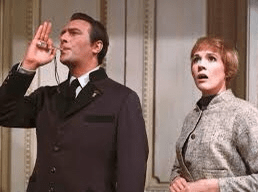
Julie Andrews as Maria and Christopher Plummer as Captain von Trapp 
The 7 von Trapp children There are a couple of variations between the film and stage production. In the stage version, “My Favourite Things” is sung by Maria and the Reverend Mother, whereas the film has it sung by Maria to the children during the thunderstorm. On stage “The Lonely Goatherd” is sung during the thunderstorm, and not in the middle of the story as in the film. Two songs from the stage version were omitted from the film: “How Can Love Survive?” – which as much as I love it is really just a song about extreme first world problems – and “No Way To Stop It”, and two songs were newly written especially for the film: “I Have Confidence” (a favourite, because it actually works as advertised) and “Something Good”, which replaces the stage version’s “An Ordinary Couple”.
Of course, I have to look into the history/historical accuracy of things so buckle up. The film condenses all the action into 1938, whereas the story depicted in the film actually began in 1926. There were seven children (but with different names and ages, all born between 1911 and 1921). The Captain and Maria did get married, on November 26th 1927, but, as Maria wrote: “I really and truly was not in love. I liked him but I didn’t love him. However, I loved the children, so in a way I really married the children. I learned to love him more than I have ever loved before or after.” They would be married for 20 years.
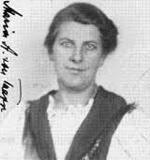
Maria von Trapp 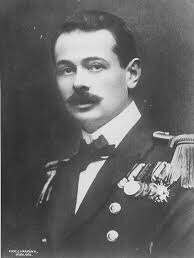
Georg von Trapp 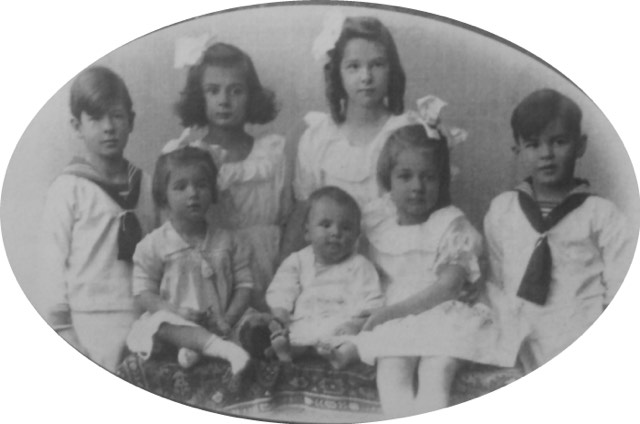
The 7 von Trapp children, photgraphed about 5 years before they met Maria There would be an additonal three von Trapps, born between 1929 and 1939. The von Trapps really did perform at a festival, but not immediately before escaping the Nazis, which they did in September 1938, not to Switzerland as in the film but to Italy, and then England before settling in the US, where Maria died in 1987. She is buried alongside her family at the Trapp Family Lodge, Vermont.
-
Li’l’ Tolkien Post
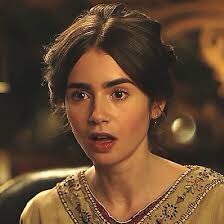
Not the best photo but, a very beautiful Lily Collins as Edith Tolkien (nee Bratt) in Tolkien (2019).
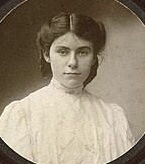
Edith Mary Bratt (b. 21st January 1889) married John Ronald Reuel Tolkien on March 22nd 1916. They had four children together: John, Michael, Christopher, and Priscilla.
Edith was a talented pianist, which is something I wish I could still do.
I’ve been really captivated by her and Tolkien’s love story in the film. They were married for 55 years, until Edith died in 1971. Tolkien died in 1973. They are buried together.
As you can maybe tell from my recent post, Tolkien is a new favourite film. Currently reading a biography of Tolkien by John Garth which covers a similar period to the film, so hoping to do a post about its accuracy and merits soon. I like to see the good in things.
This was in part an intellectual way for me to express that I think Lily Collins is beautiful. (Remember it’s still Pride Month 🏳️🌈).
But anyway. I may not have read any of Tolkien’s work but I’ve become very interested in his life, and I’m particularly keen to learn about his friendship with C.S. Lewis, who I am also reading at the moment. So that might be a future post.
-
The WW1 Novel
I realise I’ve talked about ‘the WW1 novel’ on here but never gone into detail about it. Now that Dancing with Edith (my ‘book’) is at the final stages, I’ve been working on the WW1 novel (my ‘novel’) in more depth. Particularly over the last few months as I decided to work on it as part of my Mlitt coursework.
The novel is called Edward’s Era (or EE) and it follows 5 characters before, during, and after WW1. It’s also an LGBT+ novel. It follows Enid (who is gay) and her girlfriend Clare (who is bi) and three of their friends as they participate in WW1.
Enid (who also fits under the trans umbrella), pretends to be ‘Edward’ so she can enlist as a stretcher-bearer in the war. Clare becomes a nurse. That’s all I’m going to say, but yeah. As I said in my earlier post I’ve been trying to write it for about 10 years. It’s kind of grown up with me.
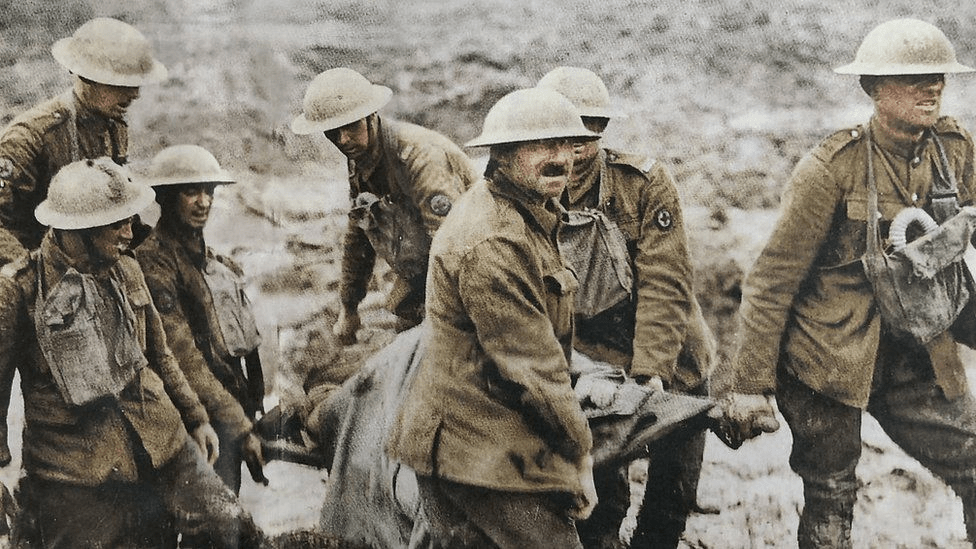
WW1 Stretcher-bearers 
Sarah the nurse from the film Passchendaele, part of the inspiration for the character of Clare Other than The Passing Bells, it’s two main inspirations are To Kill a Mockingbird (1960), in the sense that I wanted to just write a novel about ordinary life, and the first scene in EE is inspired by a scene in Mockingbird; and Jackie Kay’s Trumpet (1998). The later, post-war part of EE was inspired by Kay’s book in that I’d never seen its subject written about before and reading it was so validating.
Not sure how I’m going to continue to blog about EE without spoiling it, but basically I still have a bunch of research I feel I should do, so that’s taking up most of the brainspace right now. Last week I finally wrote out a basically complete plot for it, after nearly a decade. Aiming to finish a draft by November. Just hoping it won’t take me another 10 years to then complete it.
Thank you for reading and HAPPY PRIDE!

-
‘Doomed Youth’: Another Look at The Passing Bells
Just going to enthusiastically ramble about this series again, since I’ve been revisiting it a lot recently (I have it playing in the background while I work on my WW1 novel). Here is my previous post on it. This post will contain spoilers. (All images are taken from the online gallaries for The Passing Bells‘ BBC One page which you can find here; I couldn’t find any good images for Episode 5). The series is available to purchase on Amazon Prime Video and Apple TV.
Episode 1 – 1914
We meet Tommy and Michael, both 17, each simply living their lives. Michael is fixated on losing his virginity, and when war begins brewing he is keen to join up, telling his sweetheart Katie, who doesn’t want to make love yet, that he could buy ‘a ring’ with his soldier pay.
Tommy is also excited at the prospect of war, telling his dad he will ‘go and fight’ and that he’s ‘not scared’. They both join up against their mothers’ wishes. The night before he leaves, Michael and Katie make love.
Tommy makes ‘friends’ quickly, befriending Cyril in the enlistment line and Anthony, Ben, and Kev on their first day of training. Once they have been put through their paces, Tommy, Michael and their regiments are deployed ‘to France’.
On arrival in the trenches, they are instructed in the realities of ‘war’, with Michael being told he must keep his gun in good condition because if it ‘doesn’t fire when you need it to, then you or the man next to you is dead’, and Tommy being unimpressed that the British do not have ‘real bombs’ (instead they use tins of Ticklers jam filled with explosives).
The episode ends with the initial bit of fighting, each side firing at each other from their trenches, and Tommy’s shock as one of his ‘comrades’ is killed.
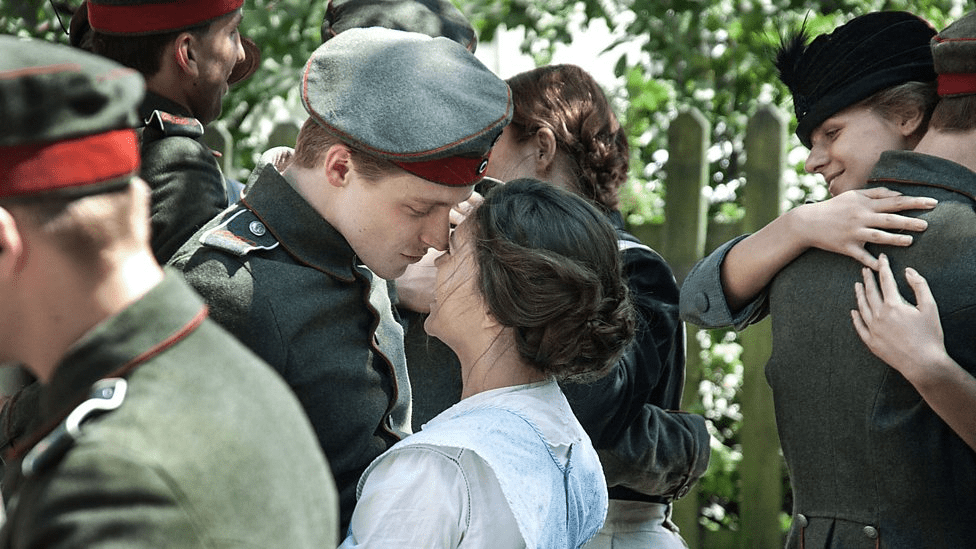
A recently-enlisted Michael and his girl Katie 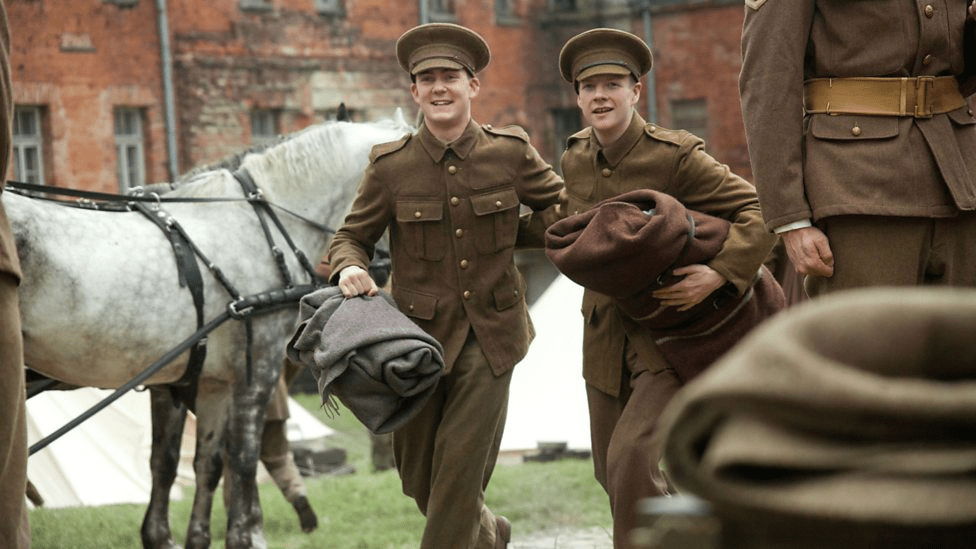
Tommy (r) and Cyril arrive at training Episode 2 – 1915
Tommy is preparing to attack the Germans with gas (the blurb for this episode describes gas as a ‘new weapon’, so potentially it’s happening during the first British use of gas, the battle of Loos), but it blows ‘back at’ them instead. Michael is on the Eastern front with some new recruits when they are attacked by Russians and Michael has to attack one in order to save his friend Freddie’s life.
Tommy gets up close to some Germans during ‘a ceasefire’ and Michael schools a fellow soldier on how to write home to his mother and father, ‘so they don’t worry’. Michael hears that he is to get ‘leave’ and Tommy awakens after being wounded.
Initially joyous, Michael’s leave is overshadowed by the struggles at home and by just how terrible what he has left behind is, but it inspires him to seize the day and marry Katie. Meanwhile Tommy makes the acquaintance of and shortly begins a ‘burgeoning romance’ with the ‘radiography assistant’, Joanna, who tended him, who tells him that she is Polish and that the Poles have hopes for their country in this ‘war we’ve been waiting for, the one that’ll give us back our homeland’ after it was ‘stolen from us’. (I didn’t know this about Poland, so I genuinely learned something).
Tommy and Michael return to the trenches and are immediately thrown back into the conflict, but both with new reasons to keep going.
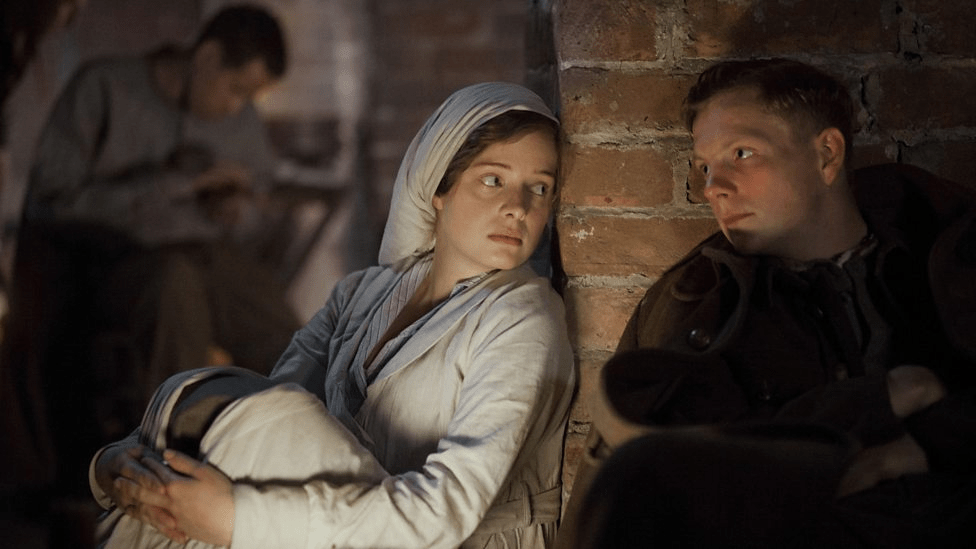
Tommy and Joanna when Tommy is recovering from his wound 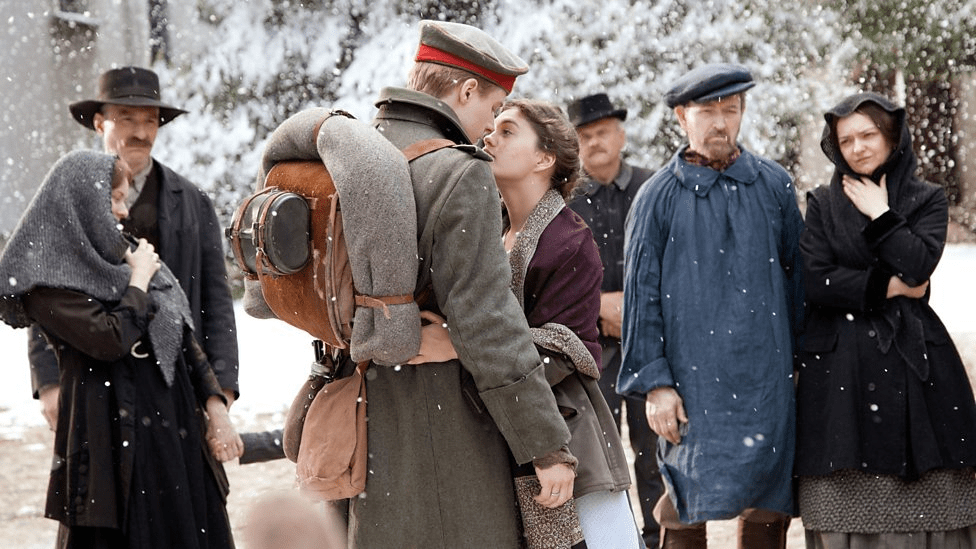
Katie and Michael say goodbye at the end of his leave Episode 3 – 1916
‘There’s something going on’ announces Ben to the others. Michael’s friends can tell something is up too, but both Tommy and Michael are occupied with their girls. Cyril orchestrates a reunion with Joanna much to Tommy’s delight – I genuinely think this is one of my favourite reunions I’ve ever seen on tv or film – but their meeting is sombre because Joanna’s ‘brother has been killed’.
What is happening is that both armies are preparing for the Somme. Michael’s regiment, ‘dig deep’ in preparation for the British ‘bombardment’. Tommy and his friend’s meet some new, ‘younger’ recruits, one of them, Derek, is only 16 and Tommy quickly makes the decision that he must protect him.
From Michael’s trench, they can hear singing, Tommy and co. are having a sing of ‘Hanging on the Old Barbed Wire’, with their particular verse going like this:
If you want to find the Sergeant,
I know where he is, I know where he is, I know where he is.
If you want to find the Sergeant, I know where he is,
He’s lying on the canteen floor.
I’ve seen him, I’ve seen him, lying on the canteen floor,
I’ve seen him, I’ve seen him, lying on the canteen floor.The next day there are are prayers before the bombardment begins. The dugout that Michael and Freddie are in is hit and they are left trapped. Meanwhile, Tommy reckons that ‘This is it, it’s over’ because ‘no one’ could ‘survive’ such a bombardment.
Michael and Freddie are rescued as Tommy warns Derek to keep to a ‘shell hole’ when they ‘go over the top’ the next day. The next morning, the British are confident that they will ‘reach the German trenches’ with ease, but instead they are met with an onslaught of gunfire (I remember this as my introduction to the reality of the Somme, which I then went on to write an essay about for my History coursework). Cyril, Anthony, Ben, and Kev are fatally hit. Tommy advances ‘forward’ while Michael is stationed at his gun, his friends also falling around him.
Later, when silence falls and the guns cease, Tommy and Michael leave their trenches to take in the carnage and as the episode ends we see the situation from above. From up high it looks like they are standing amid the ruins of a city bombed to pieces, but the wreckage is actually masses of bodies.
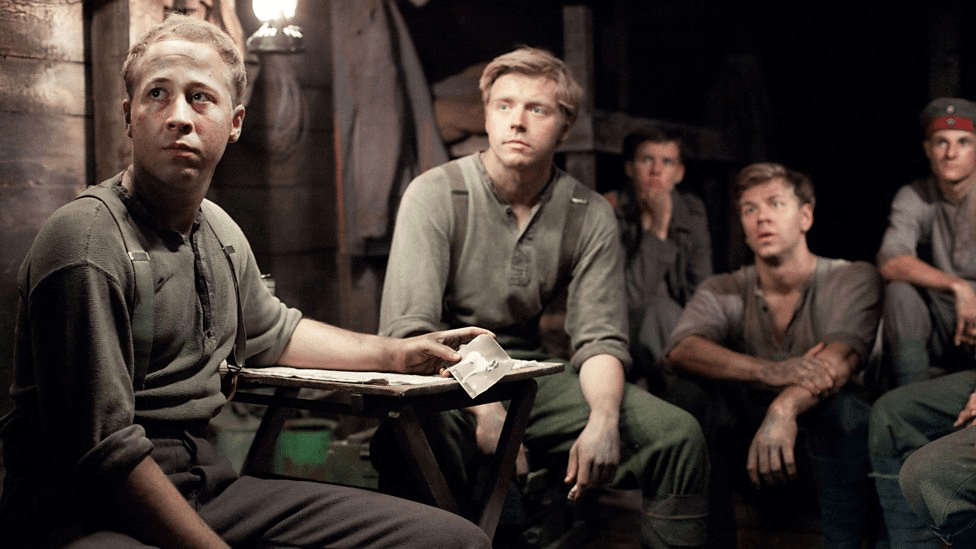
Michael and his friends Lanzo (l) and Freddie (r) in thier dugout before the bomabardment 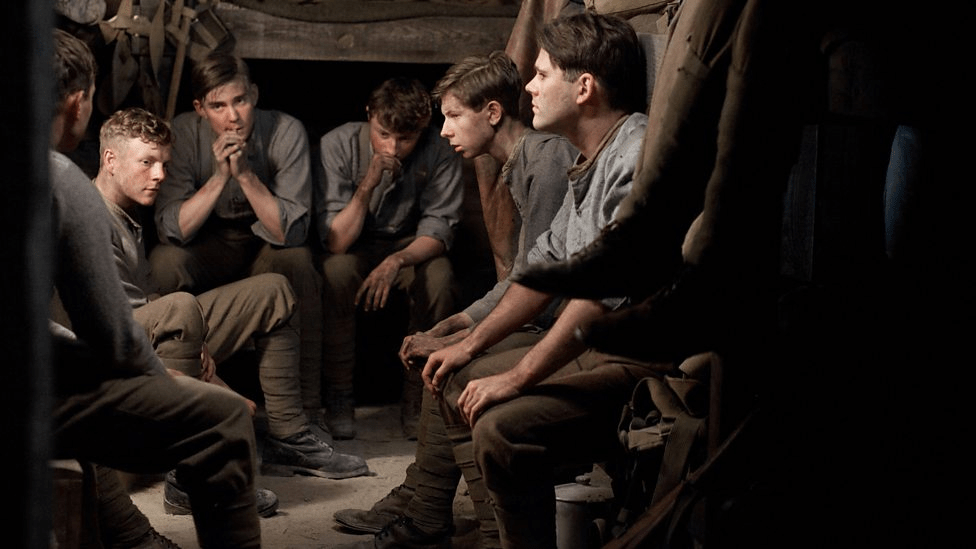
(l to r): Tommy, Cyril, new recruit Derek, and Kevin anticipate the oncoming advance Episode 4 – 1917
We begin with pathetic fallacy: heavy rain. While Tommy is still coming to terms with the loss of his mates, Michael tries to convince his new friend Erich (I like to think that this Erich is actually Erich Maria Remarque who will go on to write All Quiet on the Western Front) that the war is not futile, moments before their trench is raided.
Tommy is also feeling despair, ‘What if it never ends?’ and again, he is missing Joanna. His sergeant gives him permission to join a ‘prisoner detail’ as ‘the camp’s half a mile from where she’ll be’.
Michael is one of the prisoners, and he is trying to convince Freddie that they should make a break for it. Tommy reunites with Joanna, where he is told, ‘shocked’ yet ‘happy’ that she is pregnant. He tells her that he wants to ‘get married’ and that she should go and ‘stay’ with his family.
Aided by Freddie, who as a consequence is shot dead, Michael runs for it, chased by Tommy. Although he could, Tommy cannot bring himself to pull the trigger. They both return to their regiments.
Derek, frightened beyond endurance (possibly suffering from shellshock) attempts to flee across No Man’s Land and Tommy chases him, they are spotted by Erich, but Michael convinces him to ‘leave them’.
Tommy convinces a terrified and despairing Derek (‘I’m so scared all the time’) – whenever I feel particularly anxious, this line pops into my head and Tommy’s reply, ‘I know you are, and so am I, right, so don’t leave me to be scared on my own’, is always reassuring – to stay put because fleeing is not the route to take, and that they ‘have to keep trying’, Derek for the sake of his parents and Tommy for Joanna and his unborn child.
At home, Michael’s mother Susan is reflecting on everything the war has brought. His father William tries to reassure her that feeling ‘guilty’ over Michael’s safety while her friends’ sons are ‘dead’ is ‘only natural’.
‘Hmm, maybe that’s the problem. We’ve created a world where something like that is normal.’ Joanna arrives at Tommy’s family home as both Tommy and Michael keep watch in the trenches.
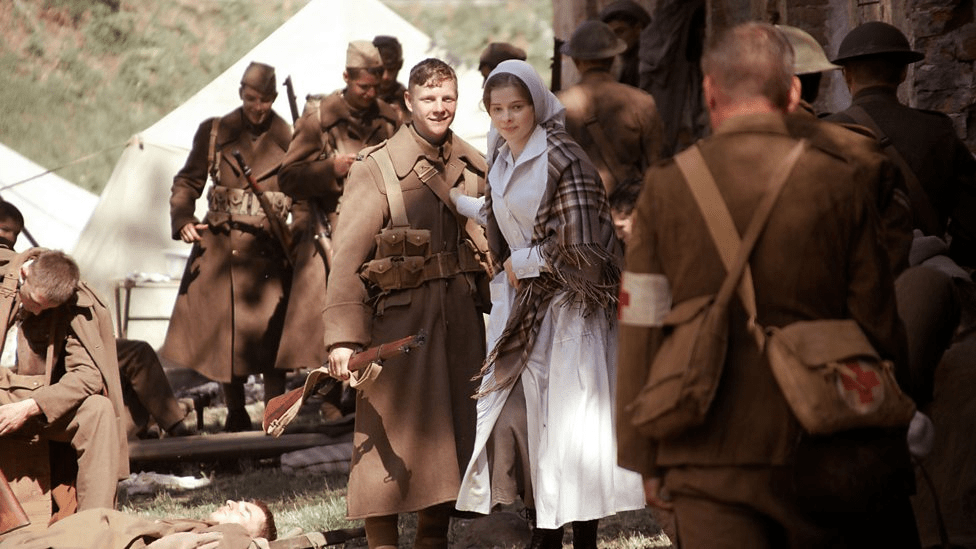
Joanna and Tommy reunited 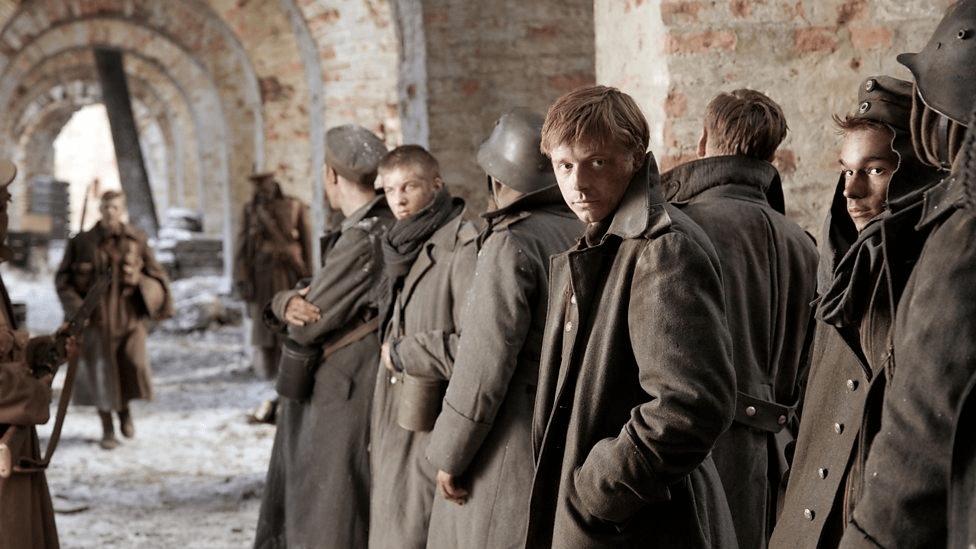
Michael now a prisoner Episode 5 – 1918
As Tommy sits in a shell hole, Joanna gives birth. Michael clings to reminders of home. Tommy gets a letter telling him that ‘It’s a boy’, named Thomas. Michael and Erich are retreating and Erich suggests that they ‘just keep going back, all the way home’.
This angers Michael, ‘I haven’t spent four years of my life watching people that I love die all around me just to drop my rifle and go home!’
Joanna hears that ‘her dad’s been killed.’ Tommy asks for ‘leave’ but gets none. Derek is ‘not right’ (still suffering shellshock) and he asks Tommy: ‘Do you think I’m a coward?’ and Tommy reassures him that ‘being scared’ ‘just means you’re human’.
There are rumours of the ‘armistice’ and Erich is concerned about the current state of Germany, but Michael is positive about going ‘home’. ‘Kaiser Bill’ abdicates and Derek is positive about this, but Tommy is not optimistic.
11th November. It’s just another day. Tommy volunteers to go and fix some ‘wire’ out in No Man’s Land, where he comes face to face with Michael. They fatally injure each other. It is declared that ‘The war is over!’ while Tommy and Michael lie dying.
After the appearance of poppies, the dead, British and German, all rise and walk out across a poppy-filled landscape, arms around one another, to fade and be replaced by the familiar white crosses. I read someone’s blog where they said they found this moving because to them it was a representation, ‘a powerful vision’ ,of their Christian ‘faith’. I found that concept quite moving, as a hopeful skeptic when it comes to faith.
The series has been described as full of the same-old stuff, and too simplistic – one article (Ellen E. Jones in the Independent) called it not ‘a realistic depiction of the horrors of war’ and another (Adam Sweeting in theartsdesk.com) ‘trite, cliched TV drama’.
In my opinion, however, this series is beautifully filmed and I particularly love the music (to be quite honest, I think it’s my favourite soundtrack to anything ever) because it reflects the mood of the story so well. (I’ve watched it enough times to be convinced that the music differs slightly for each episode).
In spite of the arguable ‘cliches’ and romanticism (see Jones, Independent) I cannot deny that this series has had a significant impact on me personally. This November it will be a decade since it first aired. I was 15 when I saw it and was beginning to study the First World War in school. I always remeber it as the partial inspiration for my novel that I am still trying to write ten years later. The two young actors who played Tommy (Patrick Gibson) and Michael (Jack Lowden) are favourite actors still, I’ve followed their careers ever since.
Tommy particularly, as the British soldier and therefore the one I can most relate to, has stuck with me. To me, he is the image of the First World War soldier, whenever I think about the war (something that happens a lot) I picture him in my head. Sometimes I forget he’s fictional. I was watching a First-World-War-themed episode of Antiques Roadshow the other day, and one man was displaying his extensive collection of the memorial plaques that would be given to dead soldiers’ families, and I thought, ‘Oh, Tommy’s family will have got one.’ Reading The Great War Handbook as part of my research for my novel, when it came to the chapter ‘Armistice Day Fatalities’, I half expected to see Tommy’s name listed.
In an interview, writer Tony Jordan said of the programme: ‘The antagonist, the only bad guy if you like, in the whole thing is the war itself.’ And I think that makes quite a powerful statement about war in general.
Jordan also said about his intentions for the programme: ‘I realised that if I stopped thinking of [the characters] as soldiers but just thought of them as boys then it would all make sense. […] It’s not about armies, or nations, causes of war, rights and wrongs of war, goodies or baddies. It’s just about boys.’
Maybe that’s why I love it so much. Even though it is about war – though it does undeniably ommit the violent reality of war, there is perhaps one instance where blood can be seen – it (likely due to the music) brings me a sense of peace and serenity whenever I watch it. The music that plays whenever something non-aggressive happens is so tender and, when the moment’s right, uplifting. It makes me feel in tune with the world. Maybe that just makes me weird, I don’t know. But I will champion this series forever more. I wish more people knew what I was talking about whenever I mention it.
-
Just a post about a favourite actor
This is a Patrick Gibson appreciation post. I’ve been keeping an eye on his career for nearly a decade and he’s genuinely one of my favourite actors.

First picture is The Passing Bells (2014), the first role I saw him in. As part of the inspiration for my novel Edward’s Era, this series means a lot to me and Gibson’s character of Tommy has stuck with me.
The second picture is from Tolkien (2019), in which he played Tolkien’s friend and fellow T.C.B.S. member Robert Gilson.
I know the Tolkien estate didn’t really want any involvement with the film and I think people, perhaps rightly, I don’t know enough about Tolkien to make that call, dismiss it on that basis.
But I enjoyed it, as a historical biopic, war film, and love story, and it for me sparked a new interest in Tolkien’s life and work, so I consider it successful. (I hope to do a more detailed post about this film and the real story behind it at some point).
Anyway, I just think this guy is cool and I’m excited to see what he does next in his promising career.
-
Li’l’ Update
Since I last blogged (April 2023) quite a bit has happened.
I’ve gone back to university, I’m working on the final draft of Dancing with Edith, and the WW1 novel I’ve been trying to write for 8 years that I thought might take me my whole life to write is actually going somewhere.
I’m doing a part-time masters, meaning it’s a two-year course, and I have just completed the first (final results pending).
In February, Edith was denied a pardon after nearly a year of waiting, but we are fighting back.
I’m still unemployed. But I might be about to submit the beginning of Dancing with Edith to an agent.
Yeah, that’s pretty much it.
-
An Actual Manuscript
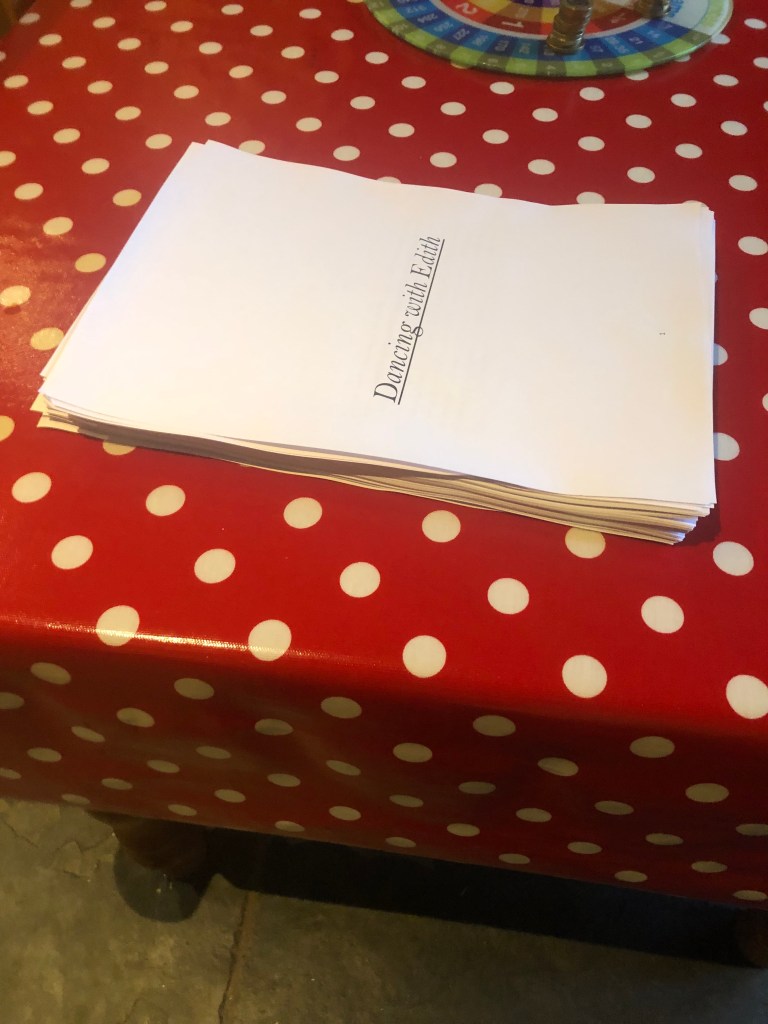
An author friend who is going to read the first draft requested a printed out version. Surreal moment.
Was going to share a spare page from the printing, but just read it and realised it’s a spoiler, basically the only spoiler in the entire book.
Looking forward to a bit of a break while I wait for feedback.
Already working on another project. Three guesses on the topic. I’ve discovered over the course of this that I might actually be better suited to writing non-fiction as opposed to fiction. Other project is similar to this one, just a different subject.
But then there is also my novel I’ve been writing for about 8 1/2 years, and it concerns the same topic as this proposed new project. I now can’t choose between the two.
I thought my novel a bit of a lost cause, given that I’ve been working on it for so long and failed to complete it, but I’ve just been looking at my notes and it’s less of a lost cause than I thought.
However, my novel is just kind of sitting there; whereas this new project is calling out to be written. I’ve considered the necessary research and it comes to some 45 books. That’s literally a year’s worth of reading. It’s exciting though, about 35 of the books I have not read and wanted to read at some point anyway. So really it’s just an excuse to learn a ton of stuff.
Of course, once I have recieved my second lot of feedback (my first lot was incredibly positive and encouraging), I will be back on Dancing with Edith. This new project is just to give me a point of focus until then.
Just spent about 30 minutes scrolling through other people’s instagrams and feeling small and unsuccessful in comparison. I know comparing yourself to other people is the one thing you are NOT meant to do but it’s habitual by this point.
But, I am very proud of my little book. And Edith. And myself for writing my little book. [Insert sage advice about pursuing your dreams]. That someone has read all those words I strung together, assured me they have value, found them unique and moving (and likened them to those of Ali Smith, whose Public Library and Other Stories gave me perpetual reassurance) means the world.
I want to sign off by telling you ‘to live in those enormous moments’, which I appreciate I have said before but it just seems appropriate. A friend asked me once what I thought that actaully meant, and I said I thought it meant, live as powerfully as you can, even if your world is just moments, sometimes the small things are the big things, they were for Edith. But I think this verse by William Blake sums up what I think it means pretty perfectly:
To see a world in a grain of sand
And a heaven in a wild flower,
Hold infinity in the palm of your hand
And eternity in an hour.There you go. Chase those little eternities.
-
International Women’s Day!!
Happy International Women’s Day to all! Here’s a big post to (I hope) celebrate and champion women.
First, here are some of my favourite women (real and fictional).
My followers may notice that Edith isn’t on this list. The sole reason for that is that I wanted to champion some different women today. Edith will forever be a strong, remarkable, femenist icon to me (shout out also to Natasha Little, who portrayed her on screen and as such, forever has my gratitude).
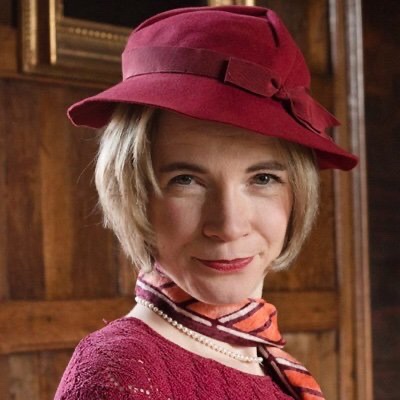
Lucy Worsley – enthusiasm personified when it comes to history and I love her hands-on approach. Would one day love to do what she does: write books and present documentaries on the things that fascinate me.
Nancy (from Oliver Twist) – one of the first fictional characters I came to love, she’s feisty, loyal and, most importantly, kind. Her relationship with Bill Sykes is in no way healthy and the fate she meets is no way deserved. But in spite of everything she puts Oliver first and is therefore, in my opinion, a proper Dickens heroine.
Anne Lister – I wouldn’t be who I am today without Anne Lister and Gentleman Jack.

Suranne Jones – Without her portrayal of Anne Lister, there would be no Gentleman Jack, and I will be forever grateful to her for bringing Anne to the screen.
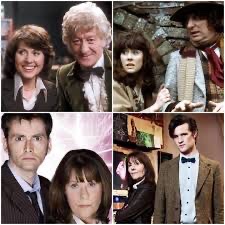
Sarah Jane Smith – my childhood role model and definitely a strong women in everything she does. Brave, kind and selfless, so glad I grew up with her to look up to.

Elisabeth Sladen – the wonderful woman who brought Sarah Jane to life, and it still saddens me that I never got to meet her.

Jo March – I related to Jo within a minute of seeing her on screen, as a tomboyish aspiring writer, but she is much more fierce than me, which is something I aspire to get better at.
Next, some book recommendations.
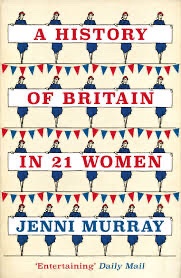
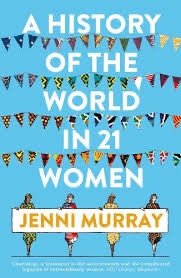
A History of Britain/The World in 21 Women by Jenni Murray. Each of these books consists of 21 mini biographies of women who have helped change and shape Britain and the world.
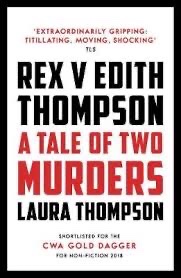
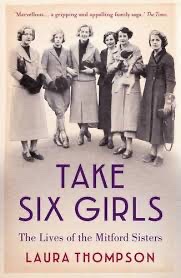
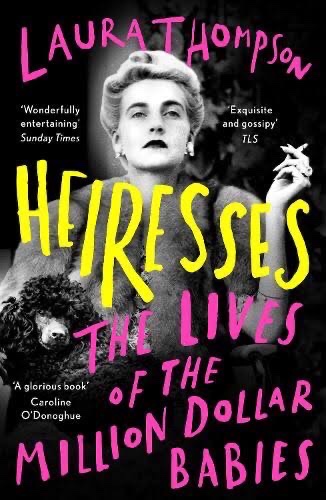
Literally anything by Laura Thompson, a fierce and eloquent feminist author who writes about a variety of women, she’s written more books than I can fit into this list, but I can personally vouch for the Edith one, Six Girls and Heiresses.
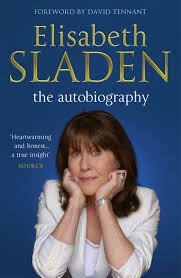
Elisabeth Sladen: the Autobiography. If you’re a Who fan, this book is essential reading but it delves into Elisabeth’s other roles too.
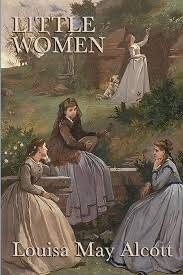
Little Women by Louisa May Alcott: an iconic piece of female literature, follow the four March sisters as they each embrace womanhood, each taking a different path in life.
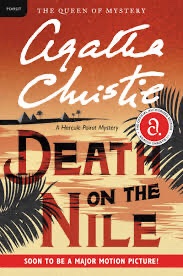
Death on the Nile by Agatha Christie. Not necessarily a book full of strong female characters (although Linnet is very sure of herself and knows what she wants) but a book by an incredible lady author whose stories have gripped the world for over a century.
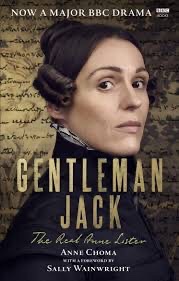
Gentleman Jack: The Real Anne Lister by Anne Choma: as a fan of Gentleman Jack, I have to reccomend this biography of the remarkable Anne Lister.
agatha christie, anne choma, anne lister, books, death on the nile, dickens, Edith Thompson, elisabeth sladen, gentleman jack, heiresses, international women’s day, jenni murray, jo march, laura thompson, little women, louisa may alcott, lucy worsley, maya hawke, mitford sisters, nancy, oliver twist, sarah jane smith, shani wallis, suranne jones -
Writerley Worries: New Year… Same Me
Hey everyone (all approximately 10 of you),
Happy 2023! Can’t believe we’re 20 days in already.
It is no real surprise that my daily vlogging on my book didn’t last very long. It was going okay and then Christmas, full of people and food, happened. I spent time with several good people and ate a lot of good food.
An update on the memoir: I’m going to have to give myself another extension into February because… I have a job now! (sort of). I received my first writerly commission: 6000 words on Ruth Ellis (it was going to be Edith, of course, but circumstances changed and arose and it was decided not to).
Temporarily moving to the Ruth Ellis camp does feel like a betrayal of Edith, but it also highlights just how huge of a miscarriage of justice Edith’s case was. People didn’t want Ruth to hang and she had openly shot her lover on a Hampstead street. It very likely helped that Ruth was born 33 years after Edith, by the 50s attitudes on women and capital punishment had changed. In the 50s there were two recent cases demonstrating the flaws of capital punishment: Timothy Evans and Derek Bentley. Nobody seems to have thought of Edith.
A week ago I (Mum came too) went to London to attend the annual memorial ceremony for Edith. It involved some readings at her graveside, and I was asked to read a letter Freddy had written to her:
“Edie – I want to ask you not to give up hope. I know & you know & some others know also that you should not be in the position that you find yourself. I’m still hoping that the powers that be, will exercise some common sense and displace their suppositions with facts. I know this must be a terrible strain on you, but Peidi mia, don’t lose heart – B.B. [be brave]”
I was also able to meet Rene Weis, author of Criminal Justice: The True Story of Edith Thompson, and Edith’s executor. He is a wonderful man. I’ve been in correspondence with him for over a year now and it was brilliant to meet him at last and find that he really is as kind as his emails suggest.
Extract time. Today’s extract comes from Part I of the memoir, which I realise I have neglected to mention. There’s a film about Edith (Another Life, directed by Philip Goodhew, it’s a great film go watch it it’s on Amazon Prime) and Part I of the memoir consists of me describing this film. As it was recently the anniversary of Edith’s death, it seems appropriate to share this bit. In it, Edith is played by Natasha Little and Avis by Rachael Stirling.
Avis comes to visit Edith in prison. On seeing Edith’s plain grey uniform, Avis’ verdict is “You look like a fashion plate.” They talk about the “petition” that is going, although in reality there never was a petition for Edith, only Freddy. For the first time Edith seems doubtful about her own innocence, referring to her letters: “Adultery, abortion, poison plots. They make pretty sordid reading.”
“There’s no crime in make-believe, Edie.” They talk about Freddy, that Edith stole him from Avis. “There’s nothing to forgive. He loves you.” says Avis with such heart-breaking conviction that I want to reach through the screen and give her a hug. Avis tells Edith not to “lose faith”.
“Do you believe in me Avis?”
“Edie, you’re my sister, you’re a part of me. I love you,” again with the same conviction.
Edith completely changes the subject: “Do you think hem lines are going to go up again?”
Avis laughs at the absurdity of this question, “They can’t do, surely?”
“Not with your ankles, eh Avis?” one last sisterly jibe.
On the way back to her cell, Edith passes Ellis. She says to the wardress, “If this has to happen, this event tomorrow morning, I should like it to be the way you read about it in a book or how they do it at the picture palace. But erm, try to understand that… what I’m trying to say, is that I’m not a storybook heroine I’m just a girl from a hat shop and erm… I might let the side down.”
The hanging takes place. As we leave the execution chamber, Edith in voice-over reads a recent letter: “Yesterday I was thinking about everything that has ever happened, it seems to help in all sorts of way when I do this. I realise what a mysterious thing life is. We all imagine we can mould our own lives – we seldom can, they are moulded for us – just by the laws and rules and conventions of this world, and if we break any of these, we only have to look forward to a formidable and unattractive wilderness.”
We are back home at Shakespeare Crescent, with Avis in the sisters’ bedroom. Dressed in black, Avis holds a photograph of Edith. She opens the box at the foot of the bed, in which are pictures and dolls and books from their childhood. Edith continues in voice-over:
“However, I’m going to forget all that now. I’m going to hope […] I’m going to live in those enormous moments when the whole of life seems bound up in the absolute necessity to win. Thank you very much for writing to me, and helping to keep me cheerful. Edith.” Avis places the photograph in the box and closes the lid.
The screen goes black. We hear Edith laughing, the way she used to. The last moments of the film belong not to her death, but to the life, vivacious, determined, bold life that she lived. She has the last word. I carry that with me as a sign of hope, that the last we hear of her is her laughing, not crying or screaming or begging for her life but laughing, triumphant and gleeful. That is who she was, and who she will continue to be. She lives on and that gives me hope, and a little bit of joy. Hearing her laugh always makes me smile, even though it comes after her death. To me she will always be laughing.
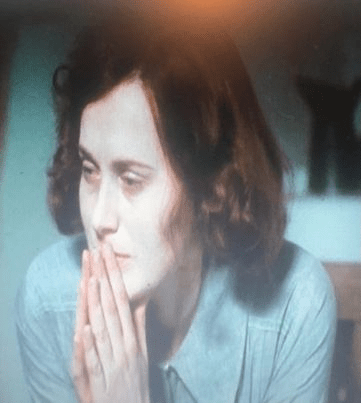
‘Just a girl from a hat shop’, Edith (Natasha Little) in Holloway
-
2022 Review
Obligatory end of year post (coming tomorrow, Books I Read in 2022). It’s been a ride. I lost a friend when they moved away, but I’ve made several new ones. Started out the year by beginning my dissertation, submitted it in May, graduated in July and then kind of ground to a halt.
Spent the rest of the year, writing, reading, job hunting and being with people.
It’s been a particularly good year for my writing, started this blog in January (and have picked it up again recently), and as of now, Dancing with Edith is at 54,226 words. I’ve even rounded off the year by having some inspiration for the until now dormant WW1 novel.
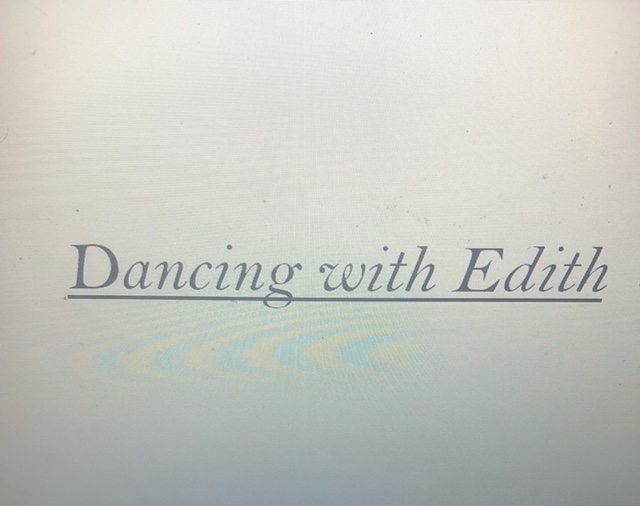
Also at the end of the year came genuine job prospects, and hoping to kick of 2023 with some paid work.
Significant figures this year include family and friends, a couple of new author friends, Agatha Christie and Hercule Poirot, and of course Edith, Freddy and Percy.

Edith first and foremost. She’s led me to go to new places and experience new things and I’m grateful.
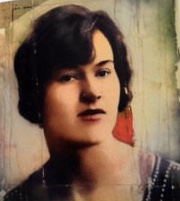
Wishing everyone a great 2023, filled with whatever you would like most.
T. H. E.
-
Memoir Musings: I’ve had a Good Day
Not necessarily in word terms, less than 500 so far, but I recieved some brilliant feedback on the piece I sent to my author friend, and having been reassurred that it is not insensitve and disrespectful, I’ve decided to share it here.
It concerns the trial, and an interruption.
Trial
Freddy is called to the witness box. He states that the two of them did not plot to ‘poison’ or harm Percy, they only discussed ‘a separation.’ When asked about the “something” he “must do” mentioned in Edith’s letter, he says it was to “Take her away”. The “electric light globe” mentioned in a different letter, Freddy explains as “mere melodrama” and Edith imagining a Bella Donna type scenario with herself as the protagonist.
“I think I got it from you but I will ask you: In these letters that have been read was there anything in any of those letters which incited you to do any act of violence to Mr Thompson?” “Nothing whatever.”
Freddy recounts how he and Edith spent some of the 3rd of October together, when they parted at Aldersgate Station (now Barbican), Edith told Freddy about her and Percy’s trip to the theatre that evening. “I wish I was going with you” she tells him.
…
Such a wishful statement. I almost want to cry. “I wish I was going with you.” If only, Edith. If only. She is keeping to herself. It is now, as I write this, December 11th, the last day of the trial. I still do not even know if Freddy has come back from London. I seek Edith out, invite her to sit by the fire with me. I repeat the statement that has apparently affected me so. “You said that to Freddy, before you went to the Criterion.”
She nods. I am worried she is going to cry. I can’t believe I am daring to broach the subject, to mention the time when it happened. “Where is he, Freddy?” She doesn’t answer. “Did he stay in London?” she nods. Realising I can only ask ‘Yes’ or ‘No’ questions, I say, “Is he coming back?”
She nods again. I wish she would talk to me. I wish she felt able to. “Do you know when?” She shakes her head. I think it is a little mean of him to leave her by herself at this time, but I do not say so. For all I know they talked about it and agreed to be apart for a few days. I do not know this for certain, but I say it to Edith anyway, in case it might help her feel better: “I think he’s seen his mother, while he’s been in London. I just have a feeling. You didn’t want to stay?” A shake of the head. “I can see why. I probably wouldn’t if I were you.”
I want her to laugh, not because anything about this is funny, but because I hate seeing her so despondent. I like it best when she laughs. “Can I do something for you? Do you… do you want a book to read, I’ve got The Fruitful Vine? Or would you rather just sit here? I can leave you alone, sorry, I just wanted very much to speak to you after reading that.” Edith sits hugging her knees, her head resting atop them. She looks at me, but still doesn’t speak.
“Do you miss Freddy?” Another nod. “Hopefully he’ll be back soon. When he comes back, will you feel better?” She nods again. I worry I have just implied she is too dependent on Freddy. “But you feel okay usually, even if he’s not around? You’re just sad at the moment because of…” I can’t bring myself to say it. I daren’t. She understands though because she nods her head more vigorously this time, as though to reassure me. “I’m glad. I’m really glad about that. I wish there was something I could do. Just let me know.” I had thought to mention that it’s nearly her birthday, but given that she spent this birthday in Holloway, she might not feel up to celebrating. What is she going to be like in January? Oh God I don’t want to think about that. It doesn’t bear thinking about.
Desperate, I try to change the subject, “Can I ask you a question?” She nods. “What’s… what’s your favourite…” I don’t actually have a question. “Did… did you have a good time with Avis the other day, is she alright?” I know as I say it that this is not the most sensible question to ask, but it was all I could think of. She nods twice. “That’s great. That’s wonderful. That’s brilliant. Avis is brilliant, I’m very fond of her.” I worry I’ve said too much but she gives another nod.
“We can talk about anything you like,” I tell her, “or I can go away. Sorry the fire’s going out.”
Edith sighs. “I’m innocent,” she says, quiet and matter of fact.
“I know Edith. I know that. So do a lot of people. Nobody will ever think you guilty again, not if I can help it.” It sounds stupid and self-important but I want her to know that I have faith in her. “I fully intend to help clear your name. You’re innocent and it needs to happen.” The next thing I say doesn’t really make sense, but I need her to know: “You’re safe now. Nobody can hurt or accuse you again.”
She nods. Then, “Can we read, you choose a book.”
“Okay, if you like. I’ve got lots of books in my room. Anything particular you’d like, romance, adventure? I have a lot of war books but I know you don’t like those.” We go upstairs and I pick Lamb’s Tales From Shakespeare. I decide on one Edith definitely knows, ‘A Midsummer Night’s Dream’: “…and they began to talk over the adventures of the night, doubting if these things had really happened, or if they had both been dreaming the same bewildering dream.”Reading seems to cheer her up a little. I wish we could talk but to read is probably a better idea. “And now, if any are offended with this story of fairies and their pranks, as judging it incredible and strange, they have only to think that they have been asleep and dreaming, and that all these adventures which they saw in their sleep: and I hope none of my readers will be so unreasonable as to be offended with a pretty harmless Midsummer Night’s Dream.”
It is now 11:13pm. Today she was sentenced to death. She was sentenced shortly before 6pm. Somewhere in the far distance, Edith screams. To think earlier we were reading Shakespeare and now, far away in another time and place, she is screaming for her life. It is a terrible sound. I don’t know where she is but that is probably best, knowing me I would say all the wrong things and make her feel worse. Will she fare any better tomorrow?
…
Back in the courtroom on December 8th, Freddy explains that he decided to go to Ilford “all of a sudden”. “I knew Mr and Mrs Thompson would be together and I thought perhaps if I was to see them I might be able to make things a bit better.” He maintains that he acted in self-defence, Percy’s response to being accosted was “I’ll shoot you”. When asked to explain the “melodrama” of Edith’s letters he replies: “She had a vivid way of describing herself; she would read a book and imagine herself as the character in the book.”
-
Writerly Worries
I didn’t blog yesterday because, frankly, I had nothing to say and very little to report. I didn’t do nearly as well yesterday at chronicling the trial, but still managed to reach day 3 of 6. I’m far behind schedule but yesterday I did complete a task I’ve been putting off for weeks, so that’s a tick.
My combined effort of yesterday and today, despite not doing as well, has still totalled over 1000 words. I went a bit rogue and added a more imaginative section into the middle of the trial. I would share it here, but I had to send it off to an author friend for a second opinion before it’s read by anyone. The subject was delicate, or at least I felt it was, so I wanted a second opinion first.
As of now, 1am on December 12th, Dancing with Edith (that’s the title, don’t think I’ve ever actually mentioned it) is officially 50,000 words!! I am very proud of myself, and I think I’m allowed to be.
Anyhow, extract time. This is from April when we stayed in Edith’s house in Shanklin.
Shanklin Again
We’ve been wandering around Shanklin all day, literally, I walked 16,000 steps. Edith came too of course.
When Edith, Percy, Freddy and Avis holidayed in Shanklin, it was far more exciting than it is now. They spent most of their time going to plays (The Merry Madcap, Fairer and Warmer) and dancing. They attended a concert in Rylstone Gardens. The Marine Hotel, no longer in existence, was host to one of their dances. They also went to events in the town hall, now Shanklin Theatre. The Playhouse Theatre is now flats, but still recognisable by its upper window. The Summer Theatre on the Esplanade has been replaced by an arcade, which makes me sad, but Edith still permeates the very air of Shanklin, particularly down at the Esplanade and outside Osborne House. The owners of the house (now Pink Beach but which I will always call Osborne) know about her. There is an old mirror in the entrance hall and I like to think it has been there since Edith’s day.
We went to the Rylstone Gardens and Keats Green and antique shops and through the chine. We walked back through it in the dark and it was lit up and looked like Peter Pan’s Neverland hideout or something, dotted with light like little fairies.
The owner of the house let me have a peek into one of the sea-facing rooms, I really hope it was Edith’s. Strangely, it was coming out of the restaurant tonight, into the lit-up street of the Old Village, that I felt closest to her. We were going to go back through the chine and I told her to come along, “Come on Edith, you’ll like this.”
June 15th 1921 saw the four Londoners go on a charabanc tour round the Island. On the last night, the 17th, they went to the theatre where they heard the song ‘One Little Hour’, which for Edith, so full of romantic notions and now ardently in love with Freddy, would come to represent their affair [listen here]:
One little hour of happiness divine
One posy from the garden of your heart;
One dream alone – that Heav’n had made you mine:
And then to part!
And then to part!One little hour of joy – a life’s regret!
A world of thorns for one elusive flow’r
And after all to treasure dearly yet
That little hour!
One little hourOne golden hour! for that eternal pain!
Yet could you stand to-day where once you stood
And ask me if for you I’d live again
That little hour – I would.That the lyrics of the song would come to mirror their affair quite so literally, with the exception of the end verse because when the end came Edith wanted ‘simply to live’, is I think, one of the saddest parts of the whole business.
…
-
Memoir Musings
I wrote over 1000 words today (Friday, I need to stop writing this after midnight). I’m currently writing up the trial and I’ve reached day two of six. It is painstakingly detailed but I am trying to only include the most relevant bits.
I’ve decided that every other day I’m going to share extracts from my draft, was going to do it daily but I’d run out of extracts. My book’s not long enough for that. I thought about sharing what I wrote today but frankly I think it’s boring. I’ll be able to make it more interesting (for me that means personal, rather than just stating facts) but I have to read a couple more sources for that.
In case any of you don’t know who ‘Rene’ is, he’s the author of THE book about Edith (Criminal Justice: The True Story of Edith Thompson), read it it’s a great book – it might make you cry though.
Anyway, here is an extract:
Snowball Fight
Mum and I went for a walk this evening. Initially I am mentally and emotionally somewhere else. It is January 14th 1922 and Edith and Freddy are having a snowball fight.
“Freddy!” Edith shrieks playfully. We attempt to shield ourselves from his onslaught of snowballs. I am dressed in my ‘20s get-up, wearing a hat similar to Freddy’s. In vain I scoop up some snow and throw it at him, he easily dodges it, only for a snowball thrown by Edith to catch him on the ear. “Got you!” I am pleased we have finally landed on target. In payment, Freddy gets me in the neck and it goes down the back of my shirt. “Ah cold!” Edith laughs.
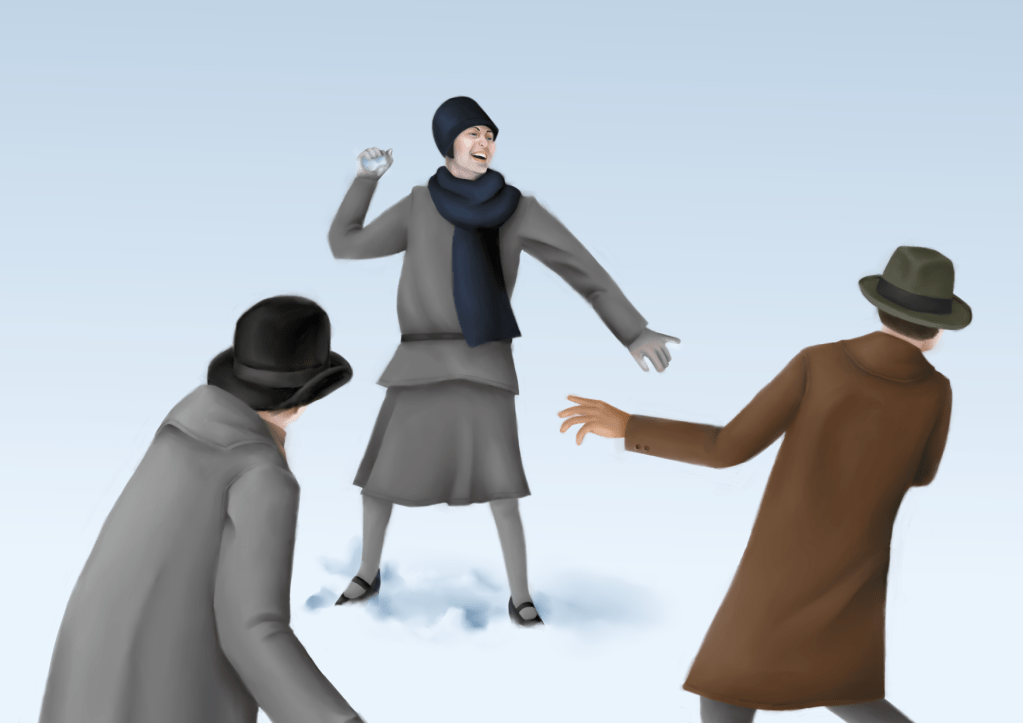
They are going to a dance later but I probably won’t go with them.
Later, I get to talking to B about Edith (again). I send them the paragraph about the snowball fight from Rene’s book, saying that Freddy “would kick ass in a snowball fight”. B asks if Edith would be good at snowball fights?
I think this over. She didn’t quite have the athleticism of Freddy, but she did well at the sports at Eastcote. I send B the part of Edith’s letter that mentions her sporting success.
[On Saturday [24 June 1922] I was first in the Egg & Spoon race & first in the 100 yards Flat race & 3rd in the 50 yards Flat race.
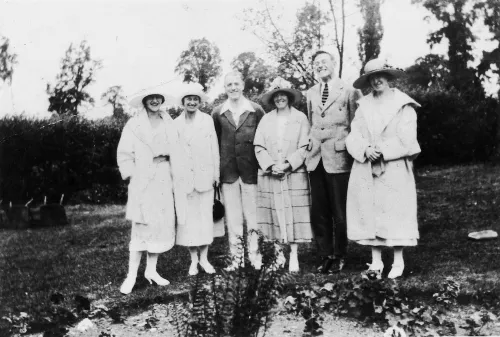
Eastcote. Edith is first on left.
Everybody tells me Im like a racehorse – can get up speed only on a long distance & my reply was ‘that if a thoroughbred did those things then I felt flattered.’]
To this B responds:
QUEEN SHIT
OMG
We agree that Edith is indeed a Queen. (This is high praise and I’m sure it would please her).
…
What do you think of the illustration? My friend who has a degree in graphic design did it for me. You can check out her work here.https://ko-fi.com/ecskinner
-
Memoir Musings and Writerly Worries: Trying to Finish a Book in 8 Weeks
(As in, finish in 8 weeks, not write the whole thing).
Today (yesterday, it’s 3am) I wrote zero words. I also did zero reading. This is how most of my days have been going recently.
However, I did have a conversation with my local writing buddy about just how hard you need to work when writing a book. The reality is that I have not been working hard enough. I hope I have it in me to work harder. They say you have to treat it like a 9 – 5 job. I have not been doing this.
Today I have also lessened my workload significanly by deciding that reading a nearly 400-page book is not necessary. I do hpwever still have to read a 500-page book.
At the moment I’m supposed to be writing about Edith and Freddy’s trial (it took place exactly 100 years ago, 6th – 11th December 1922). This involves reading the trial transcripts, which according to the text-to-speech function on my laptop, will take approximately seven hours. I have been putting it off for three days. Why? Because I find reading hard.
I’m also currently reading two books read by Freddy and Edith to try to help me understand them better, and one of the books played a part in the trial. Am hoping to make a decent start on the trial transcripts later.
Currently Reading: Harry Potter and the Philosopher’s Stone – J.K. Rowling
Favourite Track: Heaven Knows – Five for Fighting
-
Update: I still don’t have a job, but I’m writing a book
What it says in the title: I’m still jobless, but these past couple of months I’ve really been focusing on writing my book. It’s, of course, about Edith, and I aim to have finished a draft by the end of January because I’ve got a couple of people waiting to read it. Not publishers or anything but fellow writers.
I’ve almost given up on the job front, but I’m going to try to begin anew with vigour. A quote about hope:
“I’m going to hope […] I’m going to live in those enormous moments when the whole of life seems bound up in the absolute necessity to win.”
A friend pointed out that it isn’t necessarily a good idea to always think of winning as an ‘absolute necessity’ but I think the sentiment in general could help you power through tough stuff. The one thing we can always do is hope.
I’m going to try and write regular updates on how the writing is going. Currently I’m at 44,000 words (103 microsoft word pages), quite pleased with myself. Not aiming for a set number of words, more wrting it as content comes to me and I estimate that the final piece will come in January.
Reading: Thomas Hardy: The Time-Torn Man (biography by Claire Tomalin)
Favourite Track: As It Was – Harry Styles
T.H.E
-
I had a bad day, so here’s some tips for if you’re having one too
Last night I had a minor crisis. I’ve just finished uni and I don’t yet have a job. In fact I have never had a job. This is entirely my own fault and, I now realise, possibly the stupidest decision I’ve ever made. I have very little to show for three of the summers since I left school (we don’t count two in the middle of uni because covid got in the way).
This summer I am trying to be better and apply for jobs but I haven’t had any luck so far. I’m also going to try and get some voluntary experience at something (which I have previously dabbled in).
Anyway, this not having a job made me feel utterly stupid and useless and I’ve been having a bad day since. I’ve been flicking through Matt Haig’s The Comfort Book and read something reassuring (paraphrase):
When you were born, you had value just for being alive, why should that change as you get older and try to meet society’s expectations?
Another page had some songs on that he finds calming, so I thought I’d do that. Well, these at least make me feel better, if not calm per say. They’re all instrumental pieces with no lyrics, because sometimes I put too much weight on words and it just makes me more anxious. Also, I don’t know your personal music taste, but I think, by and large, everyone likes instrumental music.
Prologue – Disney’s Beauty and the Beast (this has narration)
Cannon in D – Johann Pachelbel
The Wicked Flee – Carter Burwell (from True Grit)
The Girl from the Restaurant – Tommy’s Honour Soundtrack (Christian Henson)
Arrival of the Birds – The Cinematic Orchestra
The Piano Duet – Corpse Bride Soundtrack (Danny Elfman)
Rose – James Horner
An Ocean of Memories – James Horner
The Portrait – James Horner (for these three just look up the Titanic soundtrack)
I also have three sayings, for life in general.
What’s done is done, what will come will come. This one is particularly helpful now because I reminds me that I can’t change things, even if I want to with all the will in the world.
Something is better than nothing. This is also very current, because it reminds that what I’ve got is worth something, and what I’m planning to do will also be worth something.
Make each day count. (Yes, I got this from Titanic). This has been my mantra for years. Thanks Jack Dawson for the life tip. I don’t regard this as meaning you have to accopmlish something every day, although that might be a good way to look at it. I don’t know about you, but most of my regular days aren’t memorable, so my advice is, if you can make a day memorable, do it. Even if it’s just texting a friend, then you might have a conversation that’ll make you laugh five years from now. If you’re having one of those days where you don’t want to do anything (and trust me, I’ve had those) then just do something that brings you joy. When I’m finding things tough, I like to watch a favourite film. Today, if you made things count by watching a favourite film or reading a favourite book, that’s okay.
If you have something you need to do you don’t feel up to, then allot some time. Either give yourself some time to do nothing/whatever you feel up to (I spent two hours watching YouTube videos, at which point I then felt up to looking for jobs) after which point, you tackle the task, or give yourself a certain amount of time to spend on that task, you might even find you exceed your target once you start.
My number one piece of advice is, whatever you need to do, however long for, start as soon as you can because then you won’t look back at reams of empty time like I’m doing now. I’ve applied for three jobs today. It took me an hour, if that, but I did it, so I feel like I’ve accomplished something, and something is better than nothing.
Now I’m going to go and do some baking, I need brownies.
Hope this helped, it’s made me feel better.
T.H.E.
-
100 Years of Edith’s Letters: 11th July 1922
From now, I’m going to be posting about Edith’s letters on their centenary. All letters are written by Edith to Freddy unless otherwise noted.
[Date: Tuesday 11th July 1922]
Darlint Pal,
I dont think Ive got anything to tell you just the ordinary things that happen every day & I somehow dont think you want me to talk to you about those: I went to Henley last Thursday – with the Waldorf man – I previously had the invitation but refused on the plea of business but on the Tuesday night Mr Carlton asked me if Id like Thursday off so I rang up & made arrangements to go. We got there about 12.30 and had lunch at Phyllis Court at the invitation of an M.P. Mr Stanley Baldwin – it poured with rain all the afternoon & was altogether miserable – I got home by 6.45 p.m.
It wasnt the same sort of ill feeling that it was at the time before tho.
On Saturday we go for our holiday: Shall I call it? It wont be what I anticipated will it no swimming lessons or tennis or anything that Id really enjoy. However I must make the best of it & dance – Im so tired of it all tho – this dancing and pretending.
I’ve not packed my peach sports coat: I dont want to wear it this time – so Ive left it behind.
This is the last day for posting mail to Fremantle & Ive not had your promised letter from Aden.
If it is at the G.P.O. lunch time – perhaps I’ll have some more to talk to you about before I post this.
I’ll leave it for a little while anyway.
Avis has just been round here & I was in the office having a brandy & soda with Mr. Carlton; he asked her to have one too – I think she feels very flattered: am I horrid I really believe I am – tell me – but everything in this world seems so topsy turvy – Id give anything to be her – free I mean & I think she’d change places with me this minute if we could – but we cant – so I mustn’t moan it’ll become a habit.
By the way I told you about Molly & Mr. Derry.
I think it was Tuesday he said to me ‘So you know that young lady I was talking to the other morning?’
Me: No, I don’t know her.
He: But she knows you & a lot about you.
Me: Oh probably: lots of people know me & about me that I’d rather not know.
He: I believe you’re jealous.
Darlint, just try & imagine me being jealous of her talking to him of all people. I have to laugh right out loud when I think about it. Some men have such a high opinion of themselves & their charms that I’m afraid I cant climb up to them.
I wonder what ‘my own pal’ is doing now & how he is feeling – when I try & contrast my feelings of going away this year to those of going away last year [when they went to Shanklin] – I really wonder if Im living in the same world – I suppose I am – but its not the same world to me darlint – that world last year didnt contain a pal – just one only, to whom I need to not wear a mask – but this year does – altho he is still so very far away that I go on wearing that mask to everyone I meet – every day – I wonder if there ever will be a time when I shall appear as I really am – only you see me as I really am – the ‘pretence me’ is my ordinary every day wearing apparel the ‘real’ me is only visible for such a very short time when you’re in London Darlingest Boy – I cant bear to think of you being in England and not seeing me – must we be so very strict & stern – cant you imagine what your only pal (no, not pal – Im talking to you darlint as the girl that loves you, Im talking to my veriest own lover & not as to a pal) will feel like knowing youre in London, & expecting to see you at every turn & really knowing deep down in her heart that she wont. Must you be so cruel darlint? See me once – for one whole day together for all that time & I wont mind if I dont see you any more the whole time you are in London I cant bear it if you go away without seeing me again – nearly 4 more months after September – that makes it January 1923 its too long to wait Darlint – too much to ask of any human being – especially is it too much to ask of you and I – we’re not ordinary human beings – we’re apart – different – we’ve never known pleasure – real pleasure I mean in anothers company – until we knew each other – we’ve had so few pleasures – & so many rebuffs – every one that is added now makes it harder.
Am I selfish? No, I don’t think its a selfish feeling cos its for both of us – Im fighting for our rights to break down that reserve that you’re going to build up against yourself & between
PEIDI.
-
Meet Freddy
It seems weird to introduce you to Freddy before officially introducing Edith but it also seemed a good time as it was his birthday the other day (when I started writing this post).
Frederick Edward Francis ‘Freddy’ Bywaters was born on June 27th 1902, the second child and eldest son of Frederick Sam Bywaters (1878 – 1919) and Lillian Bywaters (nee Simmons) (1874 – 1941). He had an older sister, Lillian and two younger siblings, Florence ‘Florrie’ and Frank ‘Frankie’. Freddy was the same age as Harold Graydon (Edith’s youngest brother) and friends with her other brother Bill. Another of Freddy’s friends, Bill West, remembers him fondly:
He was a hero to me. I asked him about my homework and he’d treat me with scorn: ‘You don’t know that!’ … I looked up to him, but he was so kind … what I thought of Freddy – it doesn’t mean that he thought anything of me. My appreciation is the greater because I didn’t have the qualities which he possessed … He was such a force to me which I would say exists to this day.

Freddy as a small boy Aged 13, Freddy left school and worked as an ‘office boy’ for shipping companies. In February 1918, determined and ambitious, Freddy joined the merchant navy, sailing with P & O on the Nellore. He was not yet 16 but craving adventure he was now bound for India. Throughout the rest of his career with P & O Freddy would also sail to China, Australia, Japan and Port Said.
In 1920, Freddy first lodged with the Graydon’s for the duration of his shore leave. This is how he first encountered the adult, married Edith. Edith had known him throughout his childhood but, eight years his senior, she paid him little attention. That was all about to change.
The first known correspondence between Edith and Freddy dates to September 1920, which predates what is known to be the beginning of their affair (although at the trial they would both claim this was not the case) in June 1921.
On New Year’s Eve 1920, Freddy ‘jumped ship’ whilst docked at Tilbury, Rene Weis (Edith’s biographer and executor) believes this was a rash attempt to spend the night with Edith. Had it not been for Percy intervening on Freddy’s behalf, behaving so rashly would have cost him his job.
Whatever happened before June 1921, according to Edith in her letters, this was when the first “I love you” was uttered by Freddy to her. At the time, he was holidaying with her and Percy and her sister Avis in Shanklin on the Isle of Wight. On the return from the Island, it was agreed that Freddy would lodge in ‘the little room’ at the Thompson house. On Freddy’s nineteenth birthday, mere days later, he and Edith sparked their affair by becoming lovers.
For the majority of their affair Freddy was away at sea and they communicated by letter. Only three of Freddy’s letters survive. This one is from 1st October 1922, two days before the murder.
Peidi Darlint
Sunday evening, Everybody is out and now I can talk to you. I wonder what you are
doing now my own little girl. I hope that Bill [one of her younger brothers and
a sailor] has not been the cause of further unpleasantness darlint. Darlint
little girl do you remember saying ‘the hope for all.’ ‘Or the finish of all.’
Peidi the finish of all seems terrible even to contemplate. What darlint would
it be in practice? Peidi Mia I love you more and more every day – it grows
darlint and will keep on growing. Darlint in the park – our Park on Saturday,
you were my ‘little devil’ – I was happy then Peidi – were you? I wasn’t
thinking of other things – only you darlint – you was my entire world – I love
you so much my Peidi – I mustnt ever think of losing you, darlint if I was a
poet I could write volumes – but I [am] not – I suppose at the most Ive only
spoken about 2 dozen words today I don’t try not to speak – but I have no wish
to – Im not spoken to much so have no replies to make..Darlint about the watch – I never really answered your question – I only said I wasnt cross.
I cant understand you thinking that the watch would draw me to you – where you
yourself wouldn’t – is that what you meant darlint or have I misunderstood you.
The way you have written looks to me as though you think that I think more of
the watch than I do of you – Tell me Peidi Mia that I misunderstood your
meaning.Darlint Peidi Mia – I do remember you coming to me in the little room and I think I
understand what it cost you – a lot more than it could ever now. When I think
about that I think how nearly we came to be parted for ever – if you had not
forfeited your pride darlint I don’t think there would ever have been yesterday
or tomorrow.My darlint darlint little girl I love you more than I will ever be able to show you. Darlint you are the centre – the world goes on round you, but you ever remain my world – the other part some things are essential – others are on the outskirts and sometimes so far removed from my mind that they seem non existent. Darling Pidi Mia – I answered the question about the world ‘Idle’ [idol] on Saturday – I never mentioned it.
(Sorry, that was long, but I think he’s a good writer).
Then came October 3rd, Freddy, having spent the evening with Edith’s family (the Graydons), made a ‘sudden’ decision.
I don’t want to go home; I feel too miserable. I want to see Mrs Thompson; I want to see if I can help her. […] I knew that Mr and Mrs Thompson would be together, and I thought perhaps if I were to see them it would make things a bit better. When I got into Belgrave Road I walked for some time, and some distance ahead I saw Mr and Mrs Thompson, their backs turned to me.’
Within a matter of minutes, the confrontation has taken place, Freddy has weilded his knife and Percy is dead. The following day, according to Freddy, he learnt from a copy of the Evening News that Percy was dead. He went to Edith’s family home where her father confirmed that Percy had been killed. Shortly after, two policemen arrived to take Freddy to the station ‘in connection with the Ilford murder’.
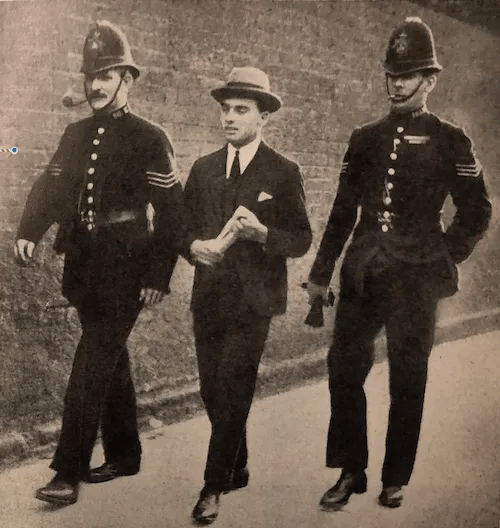
Freddy being escorted to the station At the station, blood having been found on his coat, Freddy gave the follwing statement:
When I left the [Graydon] house I went through Browning Road, into Sibley Grove, to East Ham Railway station. I booked to Victoria which is my usual custom. I caught a train at 11.30 p.m. and I arrived at Victoria at 12.30 p.m. I then discovered that the last train to Gipsy Hill had gone; it leaves at 12.10 a.m. I had a few pounds in money with me but decided to walk. I went by way of Vauxhall Road, and Vauxhall Bridge, Kennington, Brixton, turning to the left, into Dulwich, and then on to Crystal Palace, and from there to my address at Upper Norwood, arriving there about 3 a.m. I never noticed either ‘bus or tram going in my direction. On arriving home, I let myself in with a latchkey and went straight to my bedroom. My mother called out to me. She said ‘Is that you Mick?’ I replied ‘Yes’, and went to bed. I got up about 9 a.m. and about 12 I left home with my mother. I left my mother in Paternoster Row about half past two. I stayed in the City till about 5. I then went by train from Mark Lane to East Ham, and from there went on to Mrs Graydon’s, arriving there about 6. The first time that I learnt that Mr Thompson had been killed was when I bought a newspaper in Mark Lane before I got into the train to go to East Ham. I am never in the habit of carrying a knife. In fact I have never had one. I never met a single person that I knew from the time that I left Mrs Graydon’s house until I arrived home.
Once the police had searched Freddy’s home and found letters from Edith, they put two and two together. At the station, Edith was told by Inspector Hall that Freddy had admitted to the murder. Edith, who had not mentioned Freddy in an attempt to ‘shield’ him, came clean.
Hall then tells Freddy that both he and Edith are to be charged with ‘wilful murder’. On hearing this, Freddy tells Hall that Edith ‘was not aware’ of his ‘movements’ on the night of the murder and gave another staement:
I wish to make a voluntary statement. Mrs Edith Thompson was not aware of my movements on Tuesday night 3rd October. I left Manor Park at 11 p.m. and proceeded to Ilford. I waited for Mrs Thompson and her husband. When near Endsleigh Gardens I pushed her to one side, also pushing him, further up the street. I said to him ‘You have got to separate from your wife’. He said ‘No’. I said ‘You will have to’. We struggled, I took my knife from my pocket and we fought and he got the worst of it. Mrs Thompson must have been spellbound for I saw nothing of her during the fight. I ran away through Endsleigh Gardens, through Wanstead, Leytonstone, Stratford; got a taxi at Stratford to Aldgate, walked from there to Fenchurch Street, got another taxi to Thornton Heath. Then walked to Upper Norwood, arriving home about 3 a.m. The reason I fought with Thompson was because he never acted like a man to his wife. He always seemed several degrees lower than a snake. I loved her and I couldn’t go on seeing her leading that life. I did not intend to kill hm. I only meant to injure him. I gave him an opportunity of standing up to me as a man but he wouldn’t. I have had the knife some time; it was a sheath knife. I threw it down a drain when I was running through Endsleigh Gardens.
Despite Freddy’s attempts to rid her of blame, later, both he and Edith are charged with murder. The case is heard in Stratfords Magistrates Court, during which time Freddy is held at Brixton and Edith at Holloway. Once it is decided that the case will be heard at the Old Bailey, Freddy is taken to Pentonville.
The trial of ‘Thompson and Bywaters’ begins on 6th December 1922 and lasts until the 11th of December.
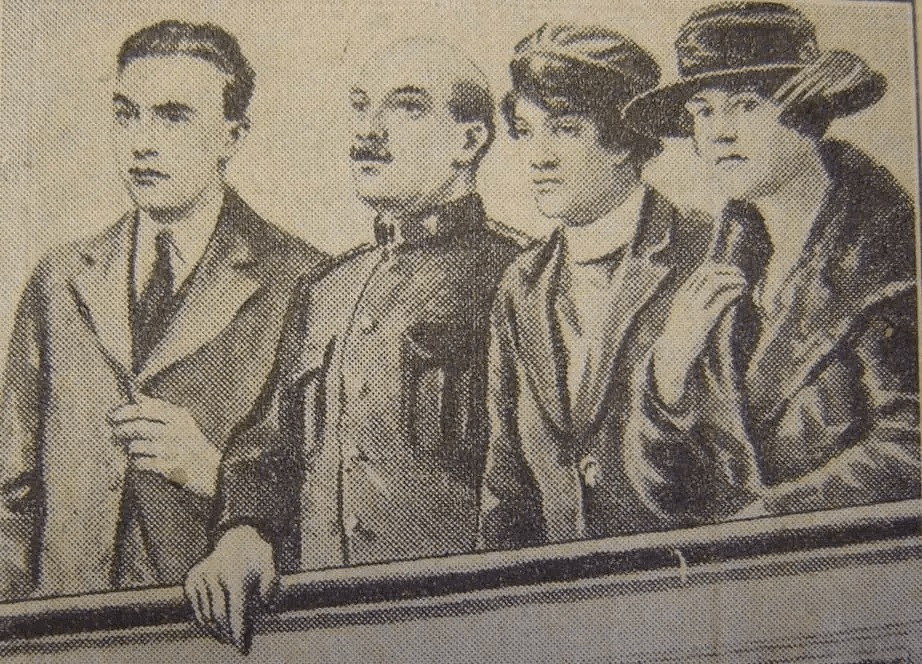
Edith and Freddy on trial When put in the witness box, Freddy’s mother describes him as ‘One of the best sons a mother ever had.’ James Douglas writes of Freddy:
And what of the boy? Frederick Bywaters is a handsome youth, with a clear skin, finely carved profile, a trenchant, high forehead, brilliant eyes, and a great wave of thick brown hair brushed back high from his white brow. He is virile and vigorous in his gait, walking with a firm step and swinging arms.
This it is that throbs all day in court – youth in the toils of destiny, youth caught in the net of circumstance.At the trial, Freddy could have defended himself by claiming that he had been led astray by Edith, a woman older than him, but he refused to take this stance.
When the guilty verdict is given and Freddy is given a chance to speak, he says: ‘I say the verdict of the jury is wrong. Edith Thompson is not guilty. I am no murderer. I am not an assassin.‘
The appeal process begins, a petition for reprieve is got up by the Daily Sketch. Freddy’s mother writes:
I am appealing to the hearts of all of the mothers of the nation to give me their help in getting a reprieve for my boy. You who have dear boys of your own will I am sure understand the terrible agony I am now suffering, and my great anxiety for his life to be spared. His father gave his life for you & yours, don’t let them take my boy from me. From a brokenhearted mother.
On 3rd January, Freddy makes a plea for his and Edith’s lives by writing to the Home Secretary, saying of Edith:
She is not only unjustly condemned but it is wicked & vile to suggest that she incited me to murder. God knows that I speak the truth when I say that there was no plan or agreement between Mrs Thompson & I to murder her husband. I can do no more, sir, than ask you to believe me – the truth – & then it is for you to proclaim to the whole world that Edith Thompson is ‘Not Guilty’ & so to remove the stain that is on her name.
The appeal having failed, Freddy’s mother writes to the King:
Your Majesty
I do humbly appeal to you to spare the life of my son Fredk. Bywaters,
now lying under sentence of death.I am driven mad with anxiety, so I take this step as the last resource,
and implore your Majesty to grant me this request.Had my poor boy a father to advise him this terrible thing would never
have happened, but my husband made the supreme sacrifice in the Great War,
leaving me with a family of four young children to support.I have done my best for them and brought them up respectably.
Freddy, my eldest boy, went out into the world at the age of thirteen and
a half years. When only fifteen he joined the Merchant Service (he was not old
enough for the Army) and stayed with the P. and O. until Sept. 23 of this year,
his character all the time being excellent.He has always been the best of sons to me, and I am proud of him, but
like many other boys of his age he fell under the spell of a woman many years
older than himself, who has brought all this terrible suffering on him.Your Majesty, I implore you to spare his young life. I have given up my
husband. For God’s sake leave me my boy.On 6th January, Freddy, visited by family, again insists upon Edith’s innocence:
I can’t believe that they will hang her as a criminal! … I swear she is completely innocent. She never knew that I was going to meet them that night. If only we could die together now it wouldn’t be so bad, but for her to be hanged as a criminal is too awful. She didn’t commit murder. I did. She never planned it. She never knew about it. She is innocent, innocent, absolutely innocent. I can’t believe that they will hang her.
Of himself he says: ‘I have not met with justice in this world, but I shall in the next. But I hope I shall die like a gentleman. I have nothing to fear.’
On the 8th of January, Freddy writes a letter asking the recipient to ‘love’ Edith and remmeber the two of them by going to their table at the Holborn restuarant (for a post that featured that letter see here.)
Freddy spends his last night talking with the governer of Pentonville, who remembers him:
‘Bywaters looked to me such a fine upstanding lad, with bright blue eyes and fair hair – a typical English boy. And his manner was exactly what you would expect, quiet, respectful, and thankful for any little kindness. His eyes showed that he had suffered much more than one usually does at that age. I thought, ‘What a strange thing: this boy, if he had not done that mad action for the sake of a woman, would, I feel certain, have turned out a good citizen.’ He was not a murderer at heart; it was due to the terrible emotion that possessed him at that time. I liked the boy. […]
When he came to my room, he thanked me in a shy way for being so kind to him. I saw he was relieved to have even a short time with me, away from his thoughts. He said, ‘I thank you, sir.’ He sat down, and I started speaking to him about his travels, and then he told me how beautiful were the colours of the Aurora Borealis, and the wonderful sunsets, and about the strange lands he had visited. He was visualising and telling me of some of these beautiful places, and the many journeys he had made to them’.
The following morning, with ‘great fortitude’ Freddy prepares himself. He dresses smartly and ‘recieves Holy Communion’. At 9am, after shaking hands with his executioner, Freddy is hanged. His fortitude and composure in the face of death has ‘become a legend’ at Pentonville. As well beleiving utterly in Edith’s innocence, Freddy did not see himself as a murderer. Today the murder might be considered a crime of passion.
‘I had no intention of killing him, and I don’t remember what happened. I just went blind and killed him. […] The judge’s summing up was just, if you like, but it was cruel. It never gave me a chance. I did it, though, and I can’t complain.’
He took someone’s life, which no one has any right to do, but it was not done with malicious intent and he paid the price. I can only hope to be as brave as he was when it came to it.
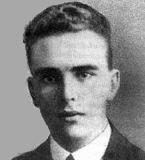
Freddy at the time of the trial -
A ‘Futureless Paradise’: Tales of Edith Thompson
*This is actually the first chunk of my dissertation, there are three, more to come*
A Ghost in Shanklin
Chapter 1
Betty Haunt Lane
Won’t you tell me the story of Betty Haunt Lane?
A young woman rests there whose love was her bane
What else holds this Isle of the past’s refrain
…
I’ve never thought of myself as a storyteller, I’ve always loved to read stories, but telling them… I didn’t write the above, it’s part of a local ditty. Everyone knew and read my own story once, and my letters too, which they had no right to, but at least Mr Curtis-Bennett thought I could write well, he said: ‘Have you ever read […] more beautiful language of love? Such things have been very seldom put by pen upon paper.’ So perhaps I won’t make too bad a storyteller. He also said I was ‘extraordinary’ but perhaps that wasn’t as well-meaning.
‘Betty’ of Betty Haunt Lane frequented the local pub, The Blacksmith’s Arms. Some people called her ‘Buxom Betty’ which I think was rather vulgar of them so I just call her Betty.
I haven’t met her, despite the road name but mostly because I don’t like to leave Shanklin too often. Betty is an alluring girl though, so occasionally I frequent The Blacksmith’s Arms too, as a respite from the many Shanklin pubs. It’s a bit of a journey but it must do me good to not always roam the same places.
When I do wander it is usually to Alum Bay, which involves walking nearly the length of the Island but as I told Freddy, ‘I could dare anything and bear everything’ for the sake of us and Alum Bay is one of our ‘places’ where our ‘two halves’ were ‘whole’ so I make sure to visit it, I owe it to my ‘darlingest boy’. It’s been ever so long since I saw him last but he was always sure we would ‘be together’ again so I am waiting and longing for my boy in hope.
I think Betty is a little like Dickens’ Nancy. That’s not to say I think she resembles Mr Cruikshank’s illustrations; I am sure she was prettier. Of course, I don’t know what she looked like, but I have an idea. I was roaming Freshwater once and I came across a house full of photographs and cameras, old cameras, older even than the one Newnie, my brother, used in the garden of 41 that day. If you go to this house, it is called Dimbola Lodge, you may see an 1872 photograph of a young woman called Alice Liddell, and I imagine Betty to have looked like her, although I imagine her to be dressed more like the photograph of May Prinsep, or ‘Christabel’, in darker colours.
While I have never met Betty, it is recorded in a book about the Island’s ghosts (there are many, many ghosts here, enough for several books) that a woman strolling the lane one night may have seen her, perhaps fleeing from her former companions, but I am in no position to verify this. Betty was murdered by smugglers because she gave them away. Smuggling used to happen all over this little island, as often as there are ghosts.
If you wake at midnight, and hear a horse’s feet,
Don’t go drawing back the blind, or looking in the street,
Them that ask no questions isn’t told a lie.
Watch the wall my darling while the Gentlemen go by.
Like Nancy, Betty was born into her dishonest trade and loved the wrong person. One day, she made a law-abiding decision, though unlike Nancy, Betty had no innocent life to save, and for it she was killed in revenge.
I was killed too. That’s what everyone says. I suppose it was in revenge in a way, in retribution. Murdered because I committed adultery. I had a husband, Percy, I didn’t love, I loved him once it’s true but by the time I met Freddy I’d stopped loving him. I loved Freddy ever so much, and he loved me. We were staying in Shanklin, Percy and me and Freddy came too, so did Avis, my sister. I miss her dearly. We were staying in Shanklin and I asked Freddy ‘What’s the matter?’ and he said, ‘You know what’s the matter, I love you’.
Chapter 2
Annabelle
I have another story, unfortunately another one of murder. This one is about Annabelle, Annabelle from Arreton. She can’t have been more than ten. She had an older brother, John, who was so wickedly desperate for his father’s money that he suffocated him with a pillow. Because Annabelle saw this, John killed her too. It’s an awful story, a story of murdered innocence. It’s also a very old story, several hundred years older than mine, from the 1500s.
I have met Annabelle, decades and decades ago, I wonder if she’d remember me? I was roaming Arreton Down in a rare adventuring further afield when I heard the tale. In truth, I wanted the company. I thought perhaps she would be older than I found her. She showed me the window she was thrown out of by her wicked brother. I told her I hoped he didn’t roam too; he mustn’t be allowed to torment her. She told me he doesn’t, but she had never seen her parents again either. She missed her mother. Were they ever reunited? I must go and see.
I told Annabelle I got caught up in a murder too, that I’d done nothing but they decided I had ‘incited’ Freddy, it was my ‘persuasion’ that led to the murder. I told her the story because she was curious. She asked if people could see me, because she was seen often by people who visited the house, at the time, there was a lovely old lady called Ivy who occasionally saw her, spoke to her too. I told her I had never been seen; I didn’t seem able to be seen. This is still the case so far as I can tell. Annabelle said Ivy would be able to see me, Ivy was kind and magic and would be able to see me. She was very sure about it. We couldn’t find Ivy so we went from a walk in the gardens instead.
Annabelle Leigh, the name seemed familiar, and I wondered if I had read of her when we visited and forgotten it, but then I remembered.
It was many and many a year ago,
In a kingdom by the sea,
That a maiden there lived whom you may know
By the name of Annabel Lee;
I don’t recall the whole poem, but I love ‘this kingdom by the sea’.
…In this kingdom by the sea,
But we loved with a love that was more than love—
My darling Freddy and me—
With a love that the wingèd seraphs of Heaven
Coveted he and me.
Annabelle felt sorry for Freddy when I told her about him, said he wasn’t wicked like her brother had been. She asked if I would come back to visit her, and if I could bring Freddy too if I found him. I told her I would but I haven’t returned yet. I haven’t found Freddy yet. Perhaps he won’t come back here, he went to so many places.
Chapter 3
Lovers & Letters
I’ll tell you a story ‘of Romeo and Juliet proportions’, or so a local author called it. Dorothy Osborne loved William Temple. Osborne and Temple; we were Thompson and Bywaters. Their story has a happier ending than mine and Freddy’s though, and do you know the best part about it all? They wed on Christmas Day. My birthday. This Christmas I will be a hundred and twenty-nine. I was twenty-nine when I died. I like that her name was Osborne, like our little house in Shanklin. It’s like Fate.
I thought Freddy and me would have our ‘ultimate success’ through Fate, thought, when I considered it all, that Fate brought us to the seafront house in Shanklin that shared a name with the lovers from Carisbrooke; and together with each other. Freddy always put no stock in Fate and the longer I’ve been here – you have plenty of time to do ‘sitting and thinking’ when you’re dead – I think he was right. Fate was more than unkind to us. But Freddy did have faith that we would be together again, I know that now. You are right, dear, we will soon be together, and what was not to be on this sordid planet, the land of cowards and curs, will be in another world.
Darlingest boy, I keep reading the letter you wrote before the ‘event’, darlint it makes me want to cry and miss you ever so much. I have found that ‘another world’ now and I am waiting and hoping and hoping that you will too. I have many a ‘tumble-down nook’ now and I do so want you to share them with.
The May after we visited the Island, there was a man about my father’s age who shot himself. The paper said it was because of ‘love and money’. His lover was ill and he was so aggrieved over their circumstances that he shot himself outside her front door. They decided afterwards that he was ‘of unsound mind’.
Would they have said likewise about Freddy and me if we’d gone ahead like we said? I kept counting down the months and I can’t say honestly what I would have done had it come to it, thinking about it I had written to Freddy: ‘don’t let us darlint. I’d like to live and be happy – not for a little while but for all the while you still love me. Death seemed horrible last night – when you think about it darlint, it does seem a horrible thing to die, when you have never been happy really happy for one little minute.’
But it never came to a decision because of what Freddy did. Why did he do it? I shall have to ask him that when I see him, or would it be wrong to bring it up? I mustn’t drive us apart so soon. His mother wrote to me on his behalf from Pentonville. She said she forgave me, so I must absolutely forgive Freddy. It was an accident. Freddy had faith and so must I. Faith in him and our ‘tumble-down nook’.
I just want a tumble-down nook by the sea,
With someone that I can love,
And who loves me:
Then I shall be happy
As the winds are free
In my dear little tumble-down nook by the sea.Chapter 4
Other Ghosts
The Island’s the best place for a ‘tumble-down nook’. Even Dickens stayed here, and in Shanklin too! He was staying at Norfolk House Hotel whilst he wrote the beginning to David Copperfield. I’ve read all his books, well, all the stories. We used to read them for school. I wrote a ‘highly commended’ essay on Daniel Quilp from Old Curiosity Shop. We would read them aloud in Wanstead Park. Perhaps Freddy is there, waiting for me as he did before. One day I might go back to London, but I like the Island best. So did Dickens, after visiting Shanklin, he spent some time in Bonchurch and wrote to his daughter: ‘I think it is the prettiest place I ever saw in my life, at home or abroad.’
I don’t think he has a ghost here, because surely everyone would talk about it. There are ‘Ghost Walks’ here in Shanklin, full of tourists. I go along sometimes. I never get a mention, but that’s because, apparently, I can’t be seen. I could give the tours if people could see me, that would be such fun, I never seem to have people to talk to here. Sometimes people come to Osborne House (there’s a much bigger Osborne House on the Island where Queen Victoria lived and I suppose that’s where our little house originally got its name, although it has a different name now, I will always call it Osborne) but people come to our little house too to stay. Some of the people who come to stay know about me and that’s always nice.
Someone sent the people who own our little house a book about me! Someone wrote a book about me; I have read it, I read it sitting on the stairs by the bookcase, a little bit every night I spend in the house, and it is a kind one. It even tells of how Virginia Woolf wrote about me. It is quite a thing to be written about by Virginia Woolf, even if it was only a reflective snippet of the morning of January 7th, two days before: People seemed to be walking. Then a woman cried, as if in anguish, in the street, and I thought of Mrs Thompson waiting to be executed. The writer of the book believes absolutely that I was innocent. According to the book, most people who know my story think I should not have been hanged, and that gives me peace in this time now. If people can look upon me with mercy, then Freddy must have been forgiven also, it seems so, the book was very kind to him too and wrote of how brave he was when the morning came.
He was always telling me to try to ‘pray God’ and ‘be brave’ but I just couldn’t stand it when it came to it, they gave me things to make me drift off, they say I was ‘practically unconscious’, as I can barely remember that morning, they must be correct. What morbid thoughts I am having. I must think of Freddy and our ‘one little hour’ we had here, that will cheer me and perhaps he will know of it and come to join me at last. I loved reading about our visit here in the book, it was such a happy time.
I went to Ilfracombe with Percy before we married, and the summer before it all happened, we went to Bournemouth. People there thought I was odd because I climbed trees and such. I was just having a bit of fun. They thought I ‘seemed a child’ and must be younger than I was. We also came back to the Island and saw the Ventnor pier. I go there sometimes. There used to be a pier here in Shanklin too, it was here when we visited and crowded always, but it was wrecked in a storm years ago. I came across to the beach from our little house, you can see the pier from the window of the room we stayed in, and it was all in pieces.
I say I have no one to talk to here, that isn’t quite true. It happened on the 27th, I always remember the 27th of the month because Freddy’s birthday was June 27th. I was roaming where the pier used to be and I met another ghost, the ghost of a drowned woman. Once, at work I heard of a woman who had ‘lost three husbands in eleven years’, two of them had drowned. I thought to myself and wrote to Freddy that life is rather ‘unfair’. They liked that, that I said a thing like that, because when it was read in court it made me look guilty.
My new companion, her name is Marjorie, had been coming home from the theatre.
“We were too!”
“We?”
“My husband and I, from the Criterion in London. We’d been to see The Dippers. It’s a farce, do you know it?” She shook her head. “What had you been to see?”
“Actually, I was acting in it,” she said. I asked what the play had been? “Shakespeare.” I told her of my playing Portia and Hippolyta in school. I used to do amateur acting with Percy too, in happier days, at Stepney New Meeting House. We did Shakespeare too, and A School for Scandal and A Christmas Carol.
Chapter 5
Holloway
Something else I know about Dickens is that he sometimes burned his letters. I told them I did that but of course they didn’t care that I’d always done it, they only thought it suspicious. I understand how it must have looked but they can’t say it was uncommon. Besides, it wasn’t Freddy’s letters to me that got us into so much trouble. If Freddy had burned the ones I wrote to him, like the one about the ‘wrong porridge’ – that was something different but they found that out too of course – things might have remained in my favour.
It is because of those letters that I came to Holloway. I read a lot of books while there, including Our Mutual Friend (‘His home was in the Holloway region north of London, and then divided from it by fields and trees.’ … ‘’Ah me!’ said he, ‘what might have been is not what is!’’) There was very little else to do. The chaplain wanted me to confess, he tried to make me but I wouldn’t, because I had nothing to confess.
I wrote to people, friends and Dad and my aunt. I wrote to Freddy’s sister because she was visiting him. I wrote to my aunt that I thought life had brought me nothing but ‘ashes and dust and bitterness’, but ashes to ashes, dust to dust; I’m still here. I’m still here. I want Freddy to be here too. We weren’t allowed to write to each other from Pentonville and Holloway, that’s why Freddy’s mother wrote to me. I know that later, after the ‘event’, his mother wrote about how heart-wrenching it had been to have to carry out ‘almost the last request of my boy’ and my heart broke for her, as she had been so kind as to include in the letter her own belief in my innocence and her forgiveness.
I had to read this “online”, where words live on screens like in the pictures I used to see with Freddy. Somewhere online someone has put our book, all sorts of things to do with us in fact. Sometimes at night I borrow the owners’ computer and go to that part of “online” so I can read about us, there’s more there than in the book, I read Freddy’s letter about ‘another world’ “online”, I wish that had been in the book because it’s quite possibly my favourite of his letters, but I love the one he asked his mother to write too.
Freddy had asked her to, ‘Tell Edie that I still love her and that my love will last through eternity. I believe that we shall meet again, for all things will be understood, and our love will triumph in the end.’ I had received that message in Holloway but it was different to hear it as he had spoken it. If he believed it then it must be true. Are things ‘understood’ yet? Perhaps not. Will I have to wait ‘through eternity’ for him. I have already waited nearly a century. I want him so badly.
I hate the thought of him being there in Pentonville. Perhaps he is trapped there, because of what he did. Perhaps he has roamed London all these years looking for me? I don’t want to go back there, not yet. There was where it was going wrong, and then went horrendously wrong. I do often think of Percy. He said he was ‘like a cat with nine lives’, despite his hypochondria. He shouldn’t have died in Belgrave Road; Freddy shouldn’t have done it. I know he didn’t mean to but he shouldn’t have followed us home in the first place. I wish we could have stayed on the Island forever, then Percy might never have died, all three of us could have lived happily. On the Island everything seemed to be going right. I didn’t love Percy but Freddy and I loved each other and we knew we wanted to be together. We made our ‘compact’ in Shanklin. I was in our old room this evening. The owners’ dog has been barking at guests again. Whoever arrived tonight has taken my book upstairs.
Years ago, I read a book a guest had brought with them. It was narrated by a ghost called Birdie. She talked about losing something belonging to her father and how it had ‘slipped through the cracks of time and went to where the lost things are’. It reminded me of Freddy’s missing letters. Letters I wrote to him that he kept but they weren’t found with my other letters, the ones they read in court and said made me guilty, that they were evidence that I ‘gave the incitement’, Freddy said in court that he took them as ‘mere melodrama.’ I was just trying to ‘keep him’ by telling him stories. I didn’t actually want Percy dead, and I didn’t try to kill him with ‘poison’ or ‘glass’, they were just stories.
I hope someone finds the letters one day. I hope they are not lost. I hope Freddy isn’t lost; he mustn’t be.
-
WW1 Wednesday: A Review of The Passing Bells.

Jack Lowden as Michael Lang and Patrick Gibson as Thomas ‘Tommy’ Edwards Welcome to WW1 Wednesday, otherwise known as weekly themed posts. Been struggling to come up with new content these past weeks, (but cutting myself some slack because I am writing my dissertation, no prizes for guessing the subject) so here’s something I made earlier on Instagram.
This series is one of the two main inspirations (the other being To Kill a Mockingbird) for a WW1 novel I’ve been trying to write for 7 years… that’s another story though. There’s a whole saga in there somewhere.
The Passing Bells is Tony Jordan’s (in my opinion totally underrated) miniseries BBC1, 2014, part of the centenary programmes.
Poet enthusiasts among you may recognise the title alludes to Wilfred Owen’s ‘Anthem for Doomed Youth’.
The youths and protagonists of this series are British Thomas “Tommy” Edwards, and German Michael Lang (played by two young actors now on the rise, Patrick Gibson and Jack Lowden, who recently played Sassoon in Terence Davies Benediction, respectively).
They enlist at the start and fight til the end. Each episode covers a different year of the war. Don’t want to say too much in case you decide to watch it.
It’s beautifully filmed and I particularly love the music because it reflects the progression of the story so well. It’s been described as full of the same-old stuff, and too simplistic (the majority of reviews seemed negative when I ventured onto google), and maybe that’s true, but how many new angles can you take on an event so often covered, only so much can happen.
And that’s part of the point besides, as the mirror-image nature of the series demonstrates.
I thought it was brilliant, there could have been swearing, some more realistic injuries and that sort of authenticity, but this one’s focus is the emotional experience of the war. Which, to be honest, is probably why I love it so much. I’m a sucker for people stories.
Anyway, totally recommend, even if just to hear the music. It’s quite possibly my favourite soundtrack ever.
-
Books I Wish Everyone Would Read (Because I Loved Them So Much)
(As I am of the ‘YouTube generation’, this post was inspired by the YouTube content of Jack Edwards (check him out if you want to listen to relaxing chat about books or just want some recommendations)).
A lot of my favourite books don’t seem very well-known, I’m always telling Mum to read them because no one else has. I have written to authors three times telling them I loved their books because they seemed like the only people who would understand.
Empire of the Sun
by J.G. Ballard
‘The best British novel about the Second World War.’ – Guardian This book is probably the reason I chose to study English at university. J.G. Ballard tends to write science-fiction, so much so that he practically has his own category, Ballardian, but this a semi-autobiographical novel about Ballard’s experiences as an adolescent boy in World War Two China. From surviving alone in a deserted expat neighbourhood, to the other-worldly life in a civilian prison camp, and what happens when the side you’re stuck on starts losing.
And The Band Played On
by Christopher Ward

‘A moving homage to all the men, women and children who heard the last music played on board […] and to the people they left behind. – Scotsman If you’re interested in the Titanic, read this book. A story about the people left behind after the sinking, and the efforts made to recover the bodies and remember the victims; this is also the story of a man’s ‘Who Do You Think You Are? family history’ forages to learn about the bright, brave, violin-playing grandfather he never knew.
The Children Act
by Ian McEwan

‘Heartbreaking… a quite beautiful work of fiction.’ – The Times A lawyer with a dilemma and a slowly failing marriage, a seriously ill teenager who gets a second chance, and the connection between these two people.
Birdsong
by Sebastian Faulks

‘Magnificent – deeply moving.’ – Sunday Times To be honest, this choice was a bit spontaneous, but it’s a First World War novel, a friend recommended it, and it has some brilliant lines. There are three main characters. It covers pre-war during, and post-war. That’s all I’m going to say because I can’t think how to describe it without giving away too much. But here’s my favourite line to try to convince you it’s beautifully written:
‘For no reason he could tell, he found that he had opened his own arms in turn, and the two men fell upon each other’s shoulders, weeping at the bitter strangeness of their human lives.’
The Absolutist
by John Boyne
‘John Boyne […] guides us through the realm of history and makes the journey substantial, poignant, real.’ – Colum McCann One of my favourite books ever. Set during and after the First World War, it follows Tristan Sadler as he meets the sister of Will Bancroft, his fellow soldier who was executed for cowardice. I read a review in the Guardian (see here) which criticised the portrayal of the war as ‘basic building blocks’ and this may be true but I think it can be argued that this is a book about people as much as war.
Two people I know have also read this, one by chance and one at my recommendation. They loved and disliked it respectively, but even the person who disliked it liked the fact that the characters had genuine flaws.
Maybe you have to like novels about the First World War to read this, which I of course do, but I was 16 when I first read it and I had never related to a fictional character more than I did to Tristan.
Rex vs. Edith Thompson: A Tale of Two Murders
by Laura Thompson (no relation)

‘In this compelling book you enter Edith’s world, root for her, and come out filled with rage and dismay at a society that showed her no mercy.’
– Evening StandardThe book I went to to learn more about Edith after watching the film Another Life, this was one of my favourite books of 2021. I don’t usually read non-fiction as it doesn’t tend to come in audiobook format, so it took me weeks to finish this and when it came to the trial there was a lot to take in with all the statements and facts, but I am now officially a fan of Laura Thompson’s writing and plan to read more of her books.
A comprehensive biography of Edith and those involved in her story, eloquently and passionately written by someone who fights her corner. It also looks at the social world Edith and her fellow women grew up in and how this had an impact on her life and of course, the case against her that saw her hanged. Featuring letter and trial excerpts and allusions to literature of the period, this book is a fascinating portrait of one of the most controversial trials of the 1920s.
Of course, I would tell you to read it because I fight Edith’s corner too. But even if you don’t read it for her sake or because it is about a particular period of history, it’s a true story and I think those are always worth reading.
andthebandplayedon, birdsong, bookreviews, christopherward, ediththompson, empireofthesun, firstworldwar, ianmcewan, jackedwards, jackedwardsyoutube, japan, jgballard, johnboyne, laurathompson, reading, readingreccomendations, reccomendedreading, rexvsediththompson, sebastiangaulks, secondworldwar, theabsolutist, thechildrenact, Titanic, titanicaftermath, WW1, ww2 -
‘When Winter Came’: A Series of Haikus
More writings and scribbles. Wrote some haikus for a creative folio. All the usual sources.
‘When Winter Came’: A Series of Haikus
Edith
When winter came
She was alone, with condemnation
Fear and grief, yet books.Freddy
When winter came,
He fretted for her because
Everything was his doing.
PercyWhen winter came,
The man lay still, out of the
Horror caused in his name.
AvisWhen winter came,
She could do nothing but wait
Hope, pray, and mourn…..
– Weis, Rene, ‘Criminal Justice: The True Story of Edith Thompson (2001): 6: When Winter Comes’ https://edithjessiethompson.co.uk/criminal-justice/chapter-6/ (
– ‘Criminal Justice: 4: The Best Pal’ https://edithjessiethompson.co.uk/criminal-justice/chapter-4/
– ‘Criminal Justice 5: The Trial’ https://edithjessiethompson.co.uk/criminal-justice/chapter-5/
– Another Life. Phillip Goodhew 2001.
– Thompson, Laura, Rex V. Edith Thompson: A Tale of Two Murders (London: Head of Zeus, Ltd., 2018).
-
From Ilford, with Love
Welcome to the vulnerability corner, where I share ‘writings and scribbles’ of mine.
Here, again, Edith is the subject but I tried to tell it through trains and places. (I’ve been reading train poetry today and typically, I write poetry after reading it). Edith got a lot of trains in her life, living in London.
I searched Laura Thompson’s book (‘Rex vs. Edith Thompson: A Tale of Two Murders’, 2018) for mentions of trains. This is a story poem and several components are mentioned in Rene Weis’ book (see https://edithjessiethompson.co.uk/ The Story, Ch.2 & 3). Also there’s a film about Edith called Another Life (free on Amazon Prime, recommend), that worked its way in here too. While reading my train poems, I found ‘Corner Seat’ by Louis MacNeice (who according to one of my English tutors is the inspiration for a Muriel Spark story I read last year):
Suspended in a moving night
The face in the reflected train
Looks at first sight as self-assured
As your own face – But look again:
Windows between you and the world
Keep out the cold, keep out the fright;
Then why does your reflection seem
So lonely in the moving night?
Feel like this poem worked its way into mine. If anyone wants to read poems about trains the book I was reading is Train Songs: Poetry of the Railway (ed. Sean O’Brien and Don Paterson). Was also possibly inspired by a phone call a bloke answered once (see the 2nd Postscript in The Prince and the Show Girl & My Week with Marylin by Colin Clark, great read for film buffs by the way).
FROM ILFORD WITH LOVE
Darlint,
Do promise you will take me to Shanklin, so we can again rattle
Into that little station, and our dreams of a ‘tumble-down nook’.
Rather than my daily trudge to Fenchurch and Aldersgate –
Where he’s taken to following me –
I’ll change for Liverpool, Holborn and you and be free.
Mum told me how you jumped ship that
New Year’s Eve and caught the last late train to Fenchurch –
Darlint, was it to see me? – this was before the train to Shanklin and our ‘times’,
Darlingest boy, I’m tired of riding,
Chugging along secretly at night,
Shall we travel all of furtive London,
You and I, before he ‘lets me go’ and
We reach the coast and the promise of the sea.
Promise me we’ll trundle again, into that little station on a slope, back to
Shanklin, our ‘times’, and our ‘tumble-down nook’ by the sea.
-
Oops It’s Already March… #1
By that I mean it was my intention to publish 365 blog posts this year, and here we are several weeks into the year with only the first one.
To summarise the year so far: I completed a nonfiction proposal for the Edith book and am now querying it again; I intend to apply for a PhD and have begun a proposal, and I’m working on a novel.
I am also looking for a job but I don’t want to talk about that.
I’m trying to do lots of reading but currently (other than as research for the novel), all I want to read about is Tolkien. I finished the book of his letters today, and now I’m reading Humphrey Carpenter’s biography. Hopefully going to follow that up with a book by Tom Shippey, and then a book about The Inklings. Reading about writers just keeps me going. I still intend to do an in-depth post about Tolkien’s life through the prism of the 2019 biopic.
The song I currently have on loop is ‘You’ll Be Alright, Kid’ by Alex Warren, because I need the perpetual reassurance. And the other day an idea for a book came to me in a dream so that’s cool I suppose.
Maybe tomorrow I will tell you about the novel.
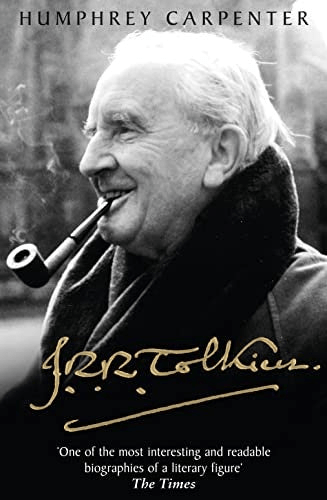

-
23rd December 1922
Letter by Edith to her aunt. (Meant to post this on the day).
[Saturday] December 23, 1922
Dear Auntie – It was good of you to send me in the book; it will help to pass a good many weary hours away, when my mind is more settled.
At present I can’t think – I can’t even feel. When I was told the result of the appeal yesterday, it seemed the end of everything.
In Life, Death seems too awful to contemplate, especially when Death is the punishment for something I have not done, did not know of, either at the time or previously.
I have been looking back over my life, & wondering what it has brought me – I once said “Only ashes and dust and bitterness”, and today it seems even less than this. – if there can be less.
This last ordeal seems to be the ultimate end of that gradual drifting through Life, passing each event, each disappointment, so many of which I have encountered and met with a smiling face and an aching heart. [for these two paragraphs, see inset]
Auntie dear, I have learnt the lesson that it is not wise to meet and try to overcome all your trials alone – when the end comes, as it has to me, nobody understands.
If only I had been able to forfeit my pride, that pride that resents pity, and talk to someone, I can see now how different things might have been, but it’s too late now to rake over ashes in the hope of finding some live coal.
When I first came into this world, and you stood to me as godmother, I am sure you never anticipated such an end as this for me. Do you know, people have told me from time to time that to be born on Christmas Day was unlucky, and my answer has always been, “Superstition is only good for ignorant people”, but now I am beginning to believe that they are right; it is unlucky.
However, what is to be will be. Somewhere I read “The fate of every man hath he bound about his neck”, and this, I suppose, I must accept as mine.
I’m glad I’ve talked to you for a little while. I feel better – it seems to lift me out of this abyss of depression into which I have fallen, and I know you will understand, not only what I have said, but all my thoughts that are not collected enough to put on paper.
Thank Leonard for me for his letter. It made me laugh, and it’s good to laugh just for five minutes. I’ll write to him another day. I can’t now – but I know he will understand.
EDITH
The quote: “The fate of every man hath he bound about his neck” is from the Koran, and Edith had read it in Robert Hichens’ Bella Donna (1909).
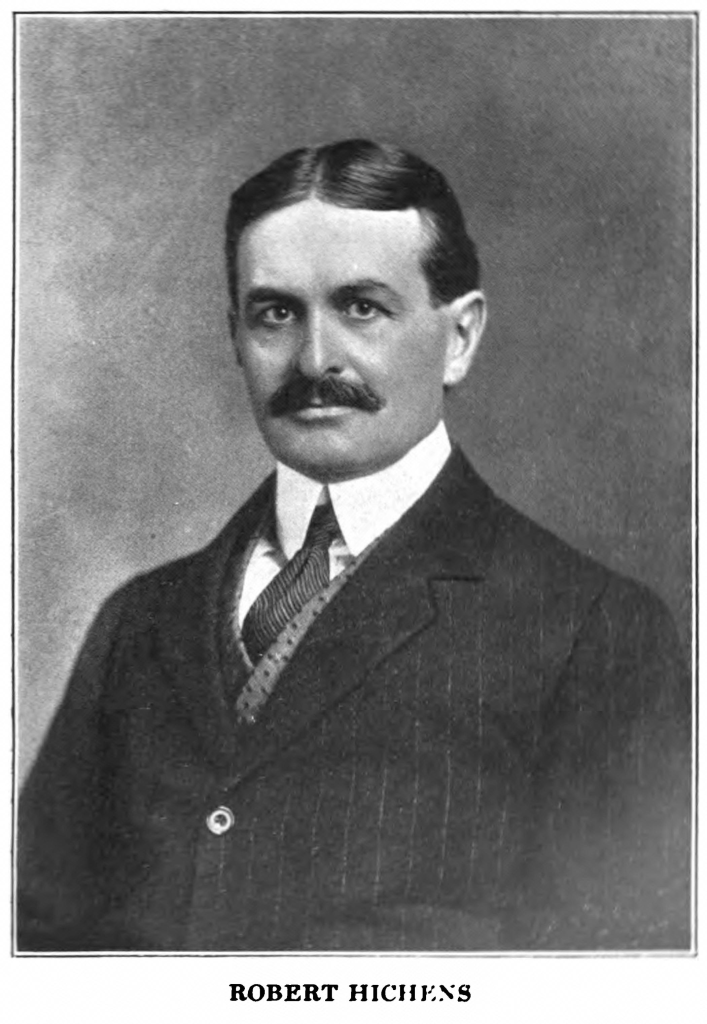

She told Freddy about it in a letter of 23rd May 1922, as Laura Thompson puts it in Rex V Edith Thompson:
‘’I daren’t think…’ she wrote, as if in trepidation, like a child half-relishing a distant lurid thrill.’
She wrote of such things, such was her romantic imagination. Dreams and reality blurred for her. Had they not done so to so great an extent, she may have lived to experience such things as the music of Vera Lynn, or the film Brief Encounter (1945), both of which I think would have appealed to her.

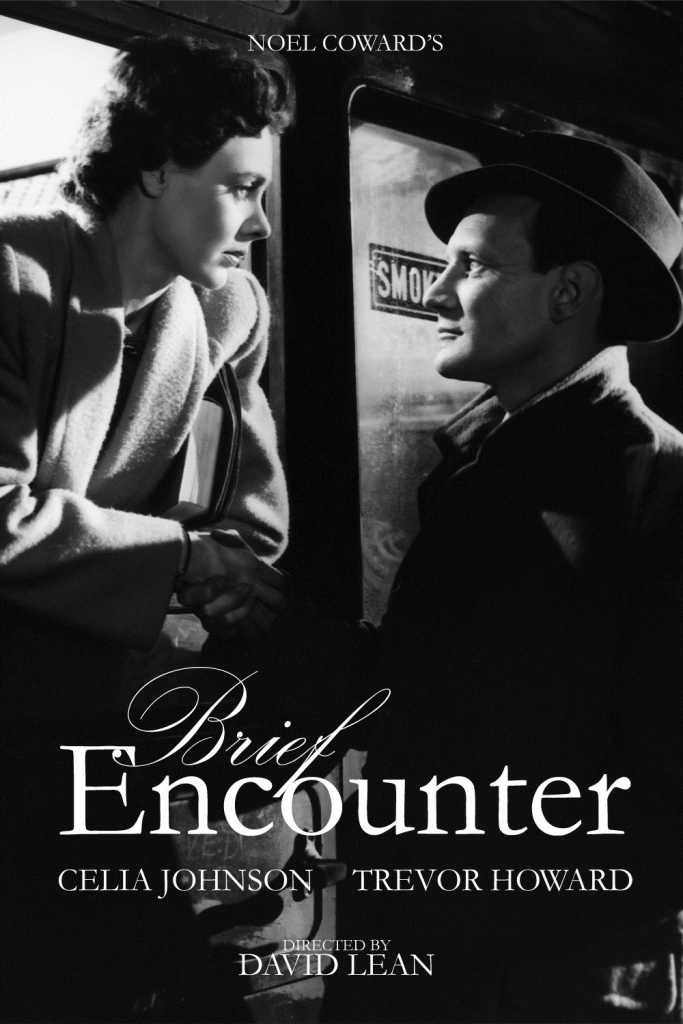
Kathryn Altman, wife of film director Robert Altman, interviewed for a documentary, told of how he had gone to the cinema and seen Brief Encounter with no great intention:
‘He said the main character [Laura Jesson] was not glamorous. Not a babe, and at first he wondered why he was even watching it. But twenty minutes later he was in tears and had fallen in love with her.’
That struck me, and is my hope for my book: that the reader will come to love Edith rather than simply pitying her.
That was one of Freddy’s last requests, that people should remember and cherish Edith, and that’s what I try to do, and it’s why I keep writing about her, and will continue to do so.
Thank you for listening ❤️
-
The Holborn
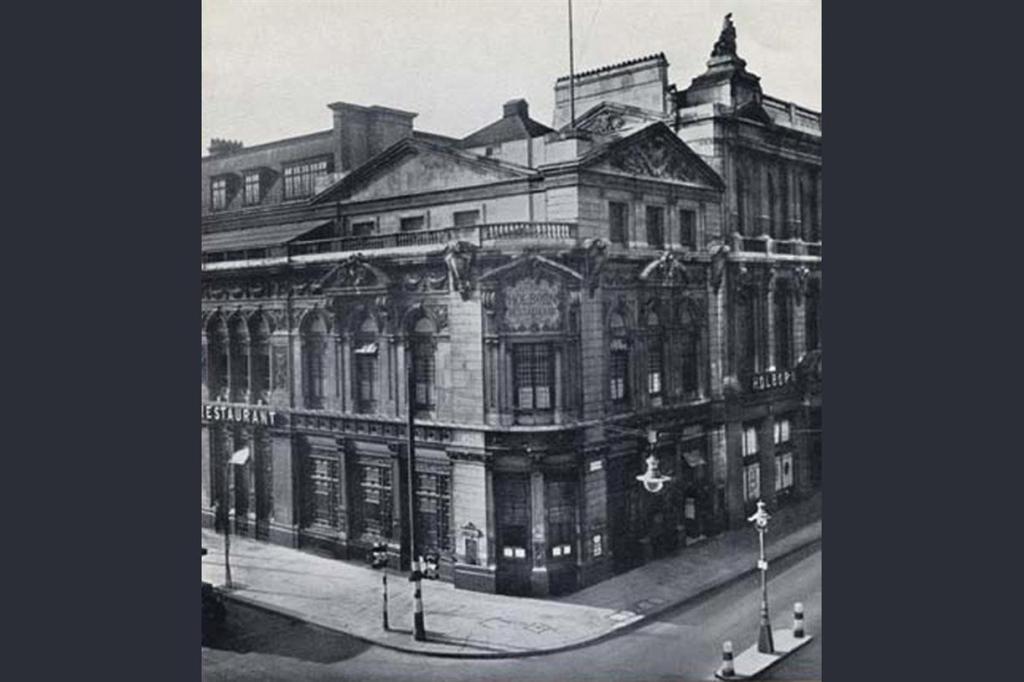
Yesterday (22nd November) was the 4 year anniversary of my fruitless attempt to visit The Holborn Restaurant in London. It was opposite what is now Holborn tube station, and I didn’t even consider that it could have been lost to modernity.


It’s now an office block, a supermarket, and a Boots. I’m still sad about it.
It was a pivotal day, inspiring me later to write the second part of my book, and I think that’s where the idea for the book itself, rather than just sporadically writing about Edith, came from.
I wrote on my blog years ago about the role this restaurant played in Edith’s story, but I’ll condense it here.
It was a place Edith and Freddy visited together, and in a letter the day before his execution, Freddy mentioned a restaurant (likely The Holborn), and requested of his correspondent that she visit his and Edith’s regular table: “Go there sometimes, you dear girl.”
I felt it was a request worth honouring, hence I went. Sorry, Freddy. I tried.
So I did what I considered the next best thing: The Holborn used to make medallions, so I bought one from eBay. I like to think it keeps me from bad fortune.

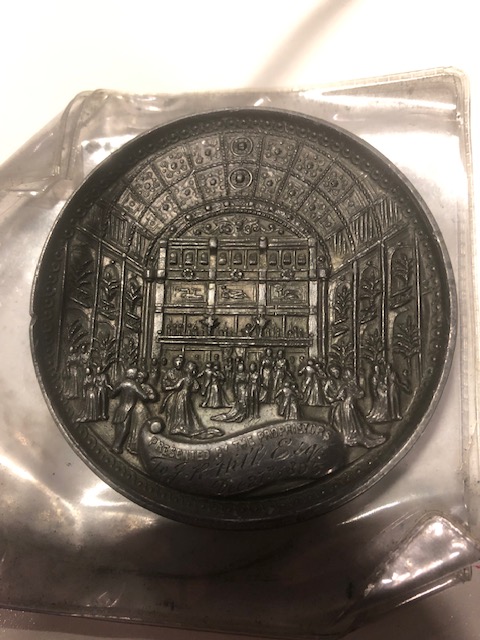
I was also reminded by a friend yesterday, that 22nd November is also the anniversary of Edith’s reburial with her parents in 2018. Maybe it was meant to be.
-
A Ramble About Writing
I feel like I’m failing at the one thing I want to do. I wrote the Edith book. I did that. I worked on it for nearly 3 years and I got there. I even submitted it to some agencies. And got rejections. Rejection sucks. However, once I had exhausted the agencies that aren’t specific about their submission conditions (i.e. different for fiction and nonfiction and as you probably know the Edith book is an awkward blend), I ground to a halt.
I have started writing a nonfiction proposal for the book, but it feels like a huge mental block. I back out every time. That’s issue 1.
Issue 2. I don’t know what to write next. And I hate that. I hate being stuck. I’m going to try and enter the WW1 novel into a competition at the end of the year, so after struggling to work on it (frankly it somewhat bores me I’ve been working on it for so long), I have decided to dedicate the month of December to it.
What to write between now and then? None of my other ideas (fiction or nonfiction) stick, or rather my enthusiasm for each is fleeting, and for that I get cross with myself.
The one idea that does stick is essentially a sequel to the Edith book. So that might form a PhD, if I do decide to take that route.
In essence, I am not writing, and that is frustrating, and my natural response is to beat myself up. Every project I have thought of comes with a mountain of research (except Edith Book 2 because I have done the majority and, somehow, retained the information), because my natural inclination is to either nonfiction or historical fiction. I’d like to try something contemporary but I haven’t had that spark of an idea yet.
If any writers see this I would welcome advice, and maybe ask your writer friends too.
Danke,
E
-
Attempts in Adulting
Okay. My original plan was to have a daily blog about writing my dissertation over the summer. But, as you can see, that did not happen. I have now finished my MLitt (I passed!), and am job-hunting (it’s anxiety-inducing).
I might do a PhD (again in Creative Writing), in which case I would try to daily blog. I’d call it PhD Pamphlets, or Doctorate Daily, because I like the alliteration.
Otherwise my life currently consists of:
Job hunting
Looking for and trying to plan a PhD
Trying to research for and write my WW1 novel
Failing to submit my Edith book to literary agencies
All of these things are overwhelming. When you have anxiety everything is overwhelming.
However, I’m not having a bad time: I’m seeing friends and I have recently discovered podcasts, which are great for when I don’t have the bandwidth for audiobooks. (My favourites are Uncanny with Danny Robins, and Inklings Book Club with Jack Edwards).
Last week I travelled to my favourite place in the whole world, the Isle of Wight, to see my grandparents and attend the literary festival. My favourite event was a talk on the haunting of Borley Rectory.
I want to blog but I worry I have nothing interesting to say. However, I’m going to do it anyway.
-
9th January 2025: The Continued Fight for Edith Thompson
I’m almost a month late with this, but it feels important.
9th January. For the third year in a row I travelled to London for a couple of days to attend the annual memorial ceremony for Edith.

(Photo taken after the ceremony on 9th January 2023, the 100th anniversary of Edith’s execution).
Last year we met in anticipation of a forthcoming pardon before it was denied at the end of February. This year we met with the same anticipation, and, I think, a new determination
The ceremony consists of readings, of a eulogy and some letters. Two of them by Edith where she reflects on her circumstances from Holloway.
Another by Edith’s mother, writing of the ‘peaceful’ look on Edith’s face after she had identified her body at Holloway following the execution.
I read Freddy’s letter to Edith, written from Pentonville a week before they died, ‘I want to ask you not to give up hope.’
I’m aware I talk about hope a lot in relation to Edith, but it’s something wonderful I have taken away through knowing her.
As she wrote to her friend Ida from Holloway, ‘However, I’m going to forget all that [her appeal had failed] now, I’m going to hope.’
We continue to do so. Edith’s innocence is well-established by this point, but this would be the final stage in the fight for justice. It would be wonderful to be able to meet next year in celebration of a triumph.
-
Crawleys on the Big Screen: The Downton Abbey Film
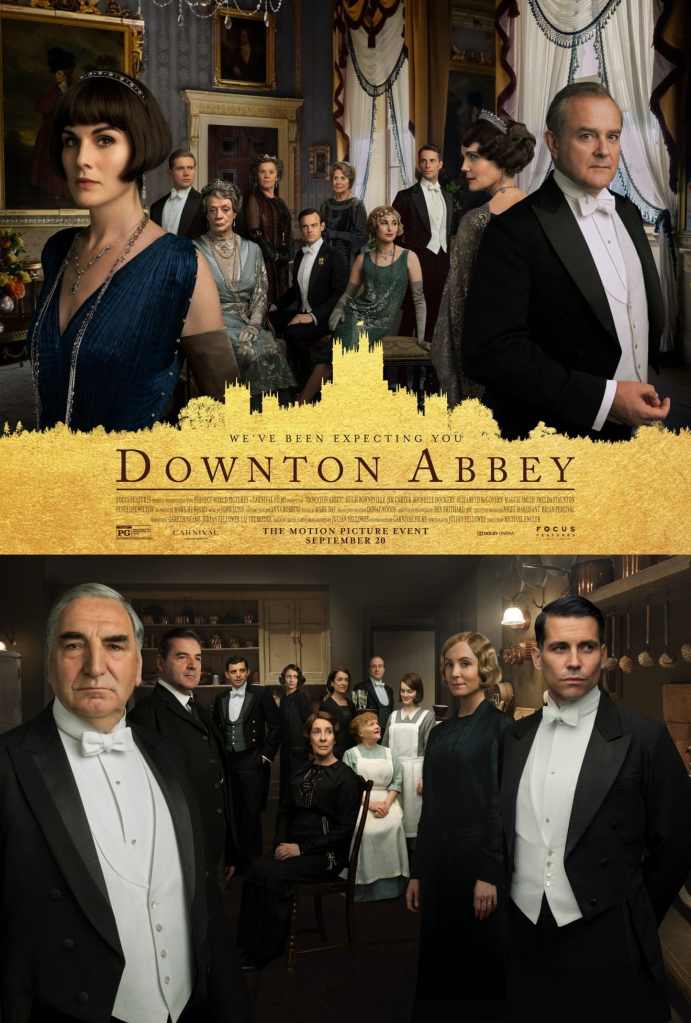
(MAJOR SPOILERS!)
The first time I watched this film I described it as ‘the most endearing pile of chaos I’ve ever watched’. In a sense, I still feel that way. It has an implausibility to it that I can’t shake. Perhaps it’s only endearing if you are a fan of the series and come to the film loving the characters and knowing their stories. There are six series of Downton Abbey (2010 – 2015), and it gained a great following over its time on television.
Who’s Who
Now, it’s hit the big screen and the Crawleys are to be blessed with a ‘royal visit’. Chaos ensues.
The Crawleys consist of Robert (Hugh Bonneville), Cora (Elizabeth McGovern) and their daughters Mary (Michelle Dockery) and Edith (Laura Carmichael) (who by this point are both married and their husbands also feature). There’s also Robert’s mother Violet, the dowager Countess (Maggie Smith), and Tom Branson, (Allen Leech) an ‘Irish republican’ and husband of the late youngest Crawley daughter Sybil. That’s upstairs.
Downstairs at Downton we have, including but not limited to, Mr Thomas Barrow the butler (Robert James-Collier), Mrs Hughes the housekeeper (Phyllis Logan), the cooks Mrs Patmore and Daisy, (Lesley Nicol and Sophie McShera) Andy the footman, (Michael C. Fox) Anna and Baxter the lady’s maids (Joanne Froggatt and Raquel Cassidy) and Mr Bates (Brendan Coyle) the valet – he and Anna are married.The news that royalty is coming to Downton is met with mixed reception: Daisy doesn’t think much of the King and admits to republican sympathies but Mr Molesley (Kevin Doyle) (an ex-footman who slips back into his ‘livery’ for the occasion) and Mr Bakewell, owner of the local shop, are ecstatic.
The Story
There are several smaller plotlines within the bigger storyline of the royal visit: the two main ones are arguably that an Irish sympathiser called Major Chetwode (Stephen Campbell Moore) attempts to assassinate the king – but is foiled by Tom, an irony that was not expected by Chetwode as he thought he had found an anti-monarchy ally. The other main one is that the servants rebel, not against their employers but against their treatment by the ‘royal servants’. Feeling ‘humiliated’ and ‘ridden over roughshod’ by the invasion of the royal servants and the fact that they will not be required or allowed to have any role in the royal visit, they cook up a scheme to get rid of the royal staff, led by Anna and Mr Bates.
This film is two hours long, and it packs a lot into that timeframe. Initially, when the visit is announced, we learn that a relative of Robert’s, Maud Bagshaw (Imelda Staunton) who has a rocky relationship with the family (Violet wants her to leave Robert her inheritance and whether or not she will do this is a point of contention between the two women) is in fact the Queen’s lady-in-waiting.
Mary does not trust Thomas Barrow to pilot the visit successfully, so enlists the help of the family’s retired butler Carson (Jim Carter). Carson was a steady and strong presence throughout all six series of the show, only retiring in the final episode and I’m sure I read a YouTube comment where someone said they cried when he reappeared at the abbey.
The royal staff arrive and the servants are not happy about it. Mary, Edith and Cora have tea with Princess Mary (her less-than-harmonious relationship with her husband will form another tendril of plot) and meanwhile Andy is jealous of the flirtatious young plumber who has come to fix the boiler, as he seems keen on Daisy (Andy and Daisy are technically engaged).
With the arrival of the second lot of royal staff, things become genuinely chaotic with disharmony between them and the Downton servants and there being ‘no hot water’ – because Andy got so angrily jealous of the plumber that he attacked the boiler with a shovel.
Upstairs, things are going missing (yet another small plotline) and Mary is struggling to keep all the plates spinning. This involves going out in a thunderstorm (what better weather to mirror chaos) to collect all the folding chairs for the parade the next day.
The next day, at least the weather has cleared up and things look good for Tom when, after ‘seven years, or nearly’ of widowerhood he meets Maud Bagshaw’s maid Lucy Smith (Tuppence Middleton) in the courtyard. The romantic potential is about as subtle as an asteroid.
During the parade, Chetwode attempts to shoot the king but Tom and Mary put a stop to it. Afterward, Tom and Miss Smith meet again.
In the wine cellar, the servants are cooking up their rebellious scheme. Mr Carson is not at all pleased but even he is swept along with it.
Tom is about to be a hero for the second time in one day when he unknowingly gives Princess Mary advice about ‘love[ing] people you disagree with’ and ‘deciding what’s important’.
Get ready for another couple of tiny plots: Thomas (who, I should mention, is gay) has made friends with the King’s valet, Richard Ellis; and Edith is both pregnant and without a dress that fits. Edith has never had much luck (the word on set during the filming of the first series was ‘Poor Edith’) and now even happily married she is to be husbandless when she gives birth because her husband has just been invited on a ‘three-month colonial tour’ with the Prince of Wales.Remember the missing objects? Well Anna discovers that Miss Lawton, the Queen’s dresser is responsible and in return for not revealing this, gets her to fix Edith’s dress.
Maud Bagshaw reveals that she intends to make Lucy Smith her heir, much to Violet’s horror. Thomas goes to a hidden gay bar and is arrested but Richard Ellis gets him released, and before they part at the film’s conclusion they share a kiss.
Violet’s cousin Isobel (Penelope Wilton), with whom she has an affectionate relationship despite their frequently locking horns, has figured out that Maud Bagshaw is in fact Lucy’s mother and when they tell Violet, she doesn’t approve but is not as shocked as they feared. Tom and Lucy, predictably, share a kiss and finish the film dancing together.
The servants celebrate a successful evening having gotten rid of the royal staff and cooking for and waiting upon the King and Queen themselves. Cora manages to solve Edith’s predicament by speaking with the Queen, Daisy decides that Andy, having confessed to wrecking the boiler, ‘just for the love of [her]’ is definitely marriage material, and Miss Lawton returns the stolen objects.
In a private moment between her and Mary, Violet reveals that she ‘may not have long to live’ – which I am sure devastated fans, Maggie Smith has become the most iconic element of Downton. But she is confident that Mary will carry forward the legacy of Downton into the future, a sentiment Mr Carson shares: ‘a hundred years from now, Downton will still be standing. And the Crawley’s will still be here. And that is a promise.’
What the Audience Thought
Of course, it was (mostly, as put by Rotten Tomatoes) a hit with fans: ‘Downton Abbey distills [sic] many of the ingredients that made the show an enduring favorite, [sic] welcoming fans back for a fittingly resplendent homecoming.’
In a review chiming more with my initial reaction, an article in Radio Times says: ‘What the film lacks is any sense of real jeopardy. As we found out from the trailer, the big plot-line is this: the King and Queen are coming to dinner and Downton must be made perfect! But that simple story is stretched out to a full two hours of incredibly low-stakes, predictable drama with an overabundance of sub-plots.’
I prefer the tv series. The film didn’t quite convince me. Sometimes, while I was watching the series, it was difficult to care about the troubles of a family who compared to many have easy lives, and the film felt like an extended version of that, especially when Mary said, ‘I want everything to stop being such a struggle.’ The Radio Times article mentioned: ‘Also predictably, the Downton movie is very much in love with the King and Queen. Creator and writer Julian Fellowes is clearly a fan of the gang at Buckingham Palace. However, even the most dedicated monarchists, the people who dress as union jacks and camp outside the hospital every time a princess is due to give birth – even they might find this a bit over-the-top.’
Similarly, there will probably be a whole group of people who will have no interest in this film, simply because it is about rich people and royalty. But the fans are loyal and for them, this is simply an extension of something beloved, why would they not watch it.
-
Leveret
This is a poem I wrote about 8 years ago when Dad found a baby hare in our garden.
Fawny-furred and tawny-eyed, As soft as heather is your silky hide. And such a precious little thing are you And delicate in the same way as glass I am afraid the world in which you bide
Will harm you hideously, for nature’s cruel, And creatures far greater than your prowess rule. Yet, in their circle, you remain a jewel, Your beauty shows of you a treasure true, A shining topaz in the garnet grass.
-
An Edith Poem
An Edith poem I wrote that doesn’t fit into the book.
Peidi was Freddy’s nickname for Edith, I think because it rhymes with Edie, but we’ll never know.
The ‘poem about death’ is from Khalil Gibran’s The Phrophet (1923), a minor anachronism But I’m taking poetic liberties.
I wrote this after reading a friend’s poetry collection (Five Fifty-Five, give it a read), which is why the terms ‘finite’ (a quote from Buzz Aldrin used as an epigraph for friend’s poem “Counting Down”) and ‘summer lawn’ (a phrase taken from friend’s poem “UnEnglished”) are in quotation marks.
If you enjoy this epistolary style, I can reccomend Fred & Edie by Jill Dawson, which consists largely of fictional letters written to Freddy by Edith in Holloway.
“Epistle”
I want to write about beatiful things. Freddy, darlint, darlint Freddy will you keep me, always keep me, the way you promised?
Someone tried to save us from this by giving us snow to walk through in Guilford Place, where everything was pale with frost and the street lamps shone.
I miss you. Are we going to die? A friend has just read a poem about how the dead never leave you, the dead never die. Will that be our fate, to linger and pulse with some non-existent force?
I think of those days we spent in Shanklin and I want them so much my soul aches. I want you so much my soul hurts. I think of a ‘summer lawn’ like in another poem this friend has just read, an endless summer lawn stretching out far and away and forever, like the grass in Wanstead park, will we ever be there again?
I love you.
I sit with my paper in Holloway and I scribble and scribble the hours away, the ‘finite’ hours I cling to so desperately. We are running out of time. I want to hold you.
In a matter of weeks it will be over, we’ll leave this world that we love so much, to think of the compact we made, and now! They will carry it through. We are cargo to be dispatched. You have been everywhere, I know. I went to Paris once but have scarcely set foot out of London, and now we are both to die here.
Here is a poem about death.
Trust the dreams, for in them is hidden the gate to eternity.
Your fear of death is but the trembling of the shepherd when he stands before the king whose hand is to be laid upon him in honour.
Is the shepherd not joyful beneath his trembling, that he shall wear the mark of the king?
Yet is he not more mindful of his trembling?For what is it to die but to stand naked in the wind and to melt into the sun?
And what is it to cease breathing, but to free the breath from its restless tides, that it may rise and expand and seek God unencumbered?Only when you drink from the river of silence shall you indeed sing.
And when you have reached the mountain top, then you shall begin to climb.
And when the earth shall claim your limbs, then shall you truly dance.Are we to melt into the sun, to truly dance? I have danced always, but am I to keep going? Wherever I’m going I long for you. It sounds more bearable, put like that. I should like to dance a foxtrot with death. In dreams is hidden eternity, do you believe that? When I think what we dreamt of mere months ago and how it has brought us to this, I see no eternity, only an end to something that cannot last that long.
Do you still love me? Will that, at least, last forever? Perhaps that is our eternal dream. I shall keep it and shelter it and keep it safe from the harsh winter cold.
With all my love,
Peidi
-
Danvers
Sometimes when scandalous or tragic things happen, they find their way into local folklore, and sometimes that includes being recorded in song. It’s that type of thing that inspired this poem.
It tells the story of Daphne du Maurier’s (13th May 1907 – 19th April 1989) Rebecca (1938), Mrs Danvers being the de Winter’s sinister housekeeper. I think of Judith Anderson from Alfred Hitchcock’s 1940 film adaptation.
I’ve also written a short story which is a sequel to Rebecca, so might post that here too.
Old Mrs Danvers was wicked and mean; On Max’s new wife she was not at all keen – His first she adored, with devotion outpoured – And thus she resolved, so callous and cold, To menace and intervene!
She told his new wife That Rebecca, still rife, Could never be gone from the hearts she had won: She’d never compare, and should sooner despair For her presence would only cause strife.
In spite of her efforts she could not succeed But the new happy couple she would not concede, They could not have peace, in a house that would cease – Rebecca had claim, and with rage aflame She committed the infamous deed.
Old Mrs Danvers, old mad Mrs Danvers Filled great Manderley with embers, Old Mrs Danvers, old mad Mrs Danvers Burnt grand Manderley to cinders!
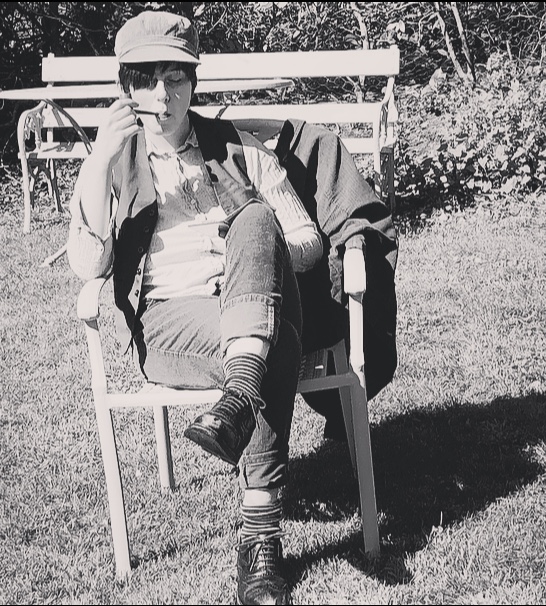
The Hopeful Edwardian
I spend a lot of time with dead people…
 The Hopeful Edwardian