A fact about me is that I love musicals. The Sound of Music is one of my favourites, and back when I held ambitions to be a musical theatre performer, I wanted to one day portray Maria. (I also wanted to be Marius in Les Miserables, but that’s another story).
For anyone that doesn’t know, The Sound of Music is set in 1938 Salzburg, and follows Maria, who is training to be a nun. The Reverend Mother advises that she spend some time away from the abbey and become a governess to the seven children (Liesl, Friedrich, Louisa, Kurt, Brigitta, Marta, and Gretl) of the widowed naval Captain Georg von Trapp, who is distant.
While it is initially rocky, Maria builds a loving relationship with the children, and she and the Captain fall in love and marry (but before that the Captain nearly marries Baroness Schrader). The children display a talent for singing thanks to Maria’s tutition, and their ‘Uncle Max’ enters them into the Kaltzberg festival.
Then the Anschluss happens, and the Captain, who is very patriotically Austrian and has always despised the Nazi regime, recieves a commission for the German navy. At this point the film becomes almost a different genre as the von Trapps attempt to escape Austria and avoid capture by Nazis. They do manage to escape of course.
I’m writing about it now because I have just started volunteering at a local theatre as an usher, as a result of which I have seen a local amatuer production of The Sound of Music three times in two days. Often when I go to the theatre I wish I could see a production again, so this was an ideal situation really.
It was an almost-all-female production, meaning that the Captain and Liesl’s boyfriend Rolf were played by women, which my little queer heart loved. Women portarying men is one of my favurite things (pun not intended).
This was actually my first time seeing the stage production in a theatre, I met the story through the 1965 film with Julie Andrews. She’s an icon. I love her. I also saw the 2015 televised live performance with Kara Tointon.
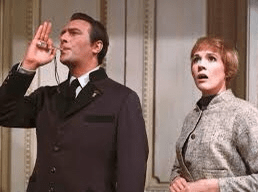

There are a couple of variations between the film and stage production. In the stage version, “My Favourite Things” is sung by Maria and the Reverend Mother, whereas the film has it sung by Maria to the children during the thunderstorm. On stage “The Lonely Goatherd” is sung during the thunderstorm, and not in the middle of the story as in the film. Two songs from the stage version were omitted from the film: “How Can Love Survive?” – which as much as I love it is really just a song about extreme first world problems – and “No Way To Stop It”, and two songs were newly written especially for the film: “I Have Confidence” (a favourite, because it actually works as advertised) and “Something Good”, which replaces the stage version’s “An Ordinary Couple”.
Of course, I have to look into the history/historical accuracy of things so buckle up. The film condenses all the action into 1938, whereas the story depicted in the film actually began in 1926. There were seven children (but with different names and ages, all born between 1911 and 1921). The Captain and Maria did get married, on November 26th 1927, but, as Maria wrote: “I really and truly was not in love. I liked him but I didn’t love him. However, I loved the children, so in a way I really married the children. I learned to love him more than I have ever loved before or after.” They would be married for 20 years.
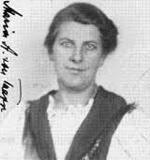
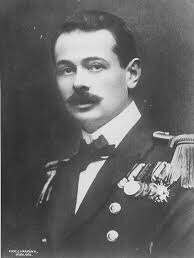
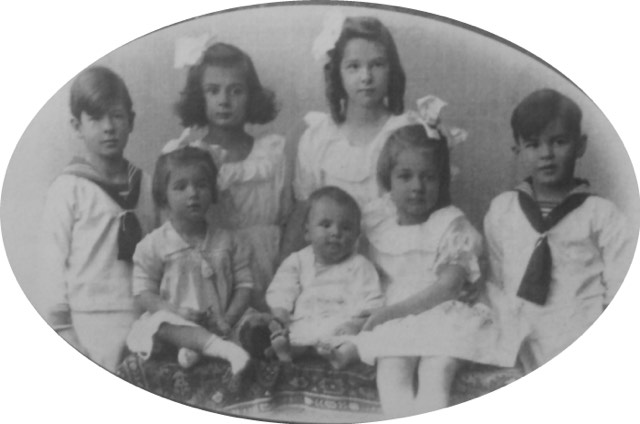
There would be an additonal three von Trapps, born between 1929 and 1939. The von Trapps really did perform at a festival, but not immediately before escaping the Nazis, which they did in September 1938, not to Switzerland as in the film but to Italy, and then England before settling in the US, where Maria died in 1987. She is buried alongside her family at the Trapp Family Lodge, Vermont.


Leave a comment